Friday, December 12, 2008 |
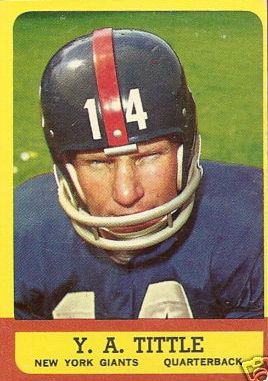
 When the talk around the tailgate turns to the subject of the greatest quarterbacks in New York Giants history, the conversation invariably turns into an argument over the respective merits of Charley Conerly, Y.A. Tittle, and Phil Simms. Eli Manning, fresh off his Super Bowl MVP award, also receives some consideration, (mostly from the tailgate's more junior attendees) as does Fran Tarkenton among those die-hards who came of age in the Giants "wilderness years." But rarely, if ever, is the name Benny Friedman uttered. And that's a shame, because as biographer Murray Greenberg points out in his fascinating new book Passing Game: Benny Friedman and the Transformation of Football, Friedman may very well have been the best of them all.
Friedman, the Giants quarterback from 1929-1931, never delivered a championship to the city of New York. But as the game's first great passer and the league's top gate attraction, Friedman's outstanding talent and popularity may have single-handedly saved both the Giants and the National Football League from financial ruin and premature extinction.
Bluenatic recently had the good fortune to conduct an interview with Greenberg over email. Here it is, unedited and in its entirety.
***
MW: To begin, a somewhat embarrassing disclosure: I am, by trade, a book editor. And despite being a proud graduate of the University of Michigan, a Jew, and a lifelong New York Giants fan with a historical bent, I passed on this project when it crossed my desk a few years back. I told your agent at the time that it was a terrific proposal and precisely the kind of book I'd love to read as a fan, but not one that I could ever convince my bottom-line oriented Publisher to take on. Considering how Benny Friedman, as you wrote in the book's introduction, has been "largely forgotten" by history, I can't imagine that I was the only editor to respond in such a manner. So my first question for you is, how difficult was it for you to find a home for Passing Game, and how did you manage to finally convince the good people at Public Affairs to take it on? For what it's worth, I'm glad they did.
MG: Benny Friedman's story is more than a football story. It is a human interest story -- a story of the rediscovery of a genuine American innovator and a huge celebrity in his day who had become lost over time, a man who during the Roaring Twenties revolutionized football with the forward pass while becoming a hero to the American Jewish community. I've always felt that readers would be fascinated to learn of Friedman's groundbreaking career and remarkable life. A number of publishers, perhaps concerned with Friedman's relative anonymity, declined my proposal. I'm most grateful to PublicAffairs for the opportunity to rediscover the story of the sensation that was Benny Friedman.
 MW: The first thing that struck me while reading Passing Game was the incredible depth of the research. The book contains perhaps the most extensive bibliography of any sports book I've ever encountered, and it's remarkable how detailed the book is considering the lack of living sources. As a first time author, how did you go about approaching the research phase of the project, and how did you manage to pull it all together? I imagine it must have taken years.
MG: I reviewed a great deal of material and it did take several years to research and write the book. But the work gave me the opportunity to indulge my love for sports and history, and I thoroughly enjoyed the process.
MW: Though you expose some of Friedman's faults, most notably his oversized ego, it is hard for you to suppress your admiration and respect for your subject throughout the biography. That said, you are careful not to speculate too much on the cause of Friedman's exclusion from the Pro Football Hall of Fame until 2005, more than twenty years after his death, or his general lack of recognition among the greatest athletes of his era. Looking back now with a fully informed perspective, why do you think Friedman's incredible career and contributions to the evolution of football offenses have been so overlooked? After all, this is a man whom Paul Gallico once called "the greatest football player in the world," and whose record for touchdown passes in a season (20) stood for 13 years. How much of this do you think can be attributed to anti-semitism? How much to the brevity of his pro career? And how much to the perceived stain his suicide might have left on his legacy?
MG: Occasionally, for various reasons and, sometimes, for no discernible reason, people who have made important contributions in their fields and attained great celebrity become lost over time. Friedman was one such man -- perhaps due to the fact that he played so long ago, perhaps for no discernible reason. Or perhaps due to anti-Semitism, though I've not come across any hard evidence to confirm that. Nor have I come across any hard evidence that would establish that anti-Semitism kept Friedman out of the Pro Football Hall of Fame. However, anti-Semitism can be subtle. Given that, and given Friedman's singular contributions to the game and his peerless ability as recognized by the writers and players of his time -- the great Red Grange called Friedman the best quarterback he ever played against -- it is not unreasonable to consider anti-Semitism as a possible factor. That said, Sid Luckman was elected in the Hall's third class.
Some Hall voters may have felt Friedman didn't play long enough, but by the standards of his time, his career wasn't overly short. I don't believe Friedman's suicide -- which in any case occurred 19 years after the Hall's first class was inducted -- was a factor.
MG: Benny Friedman's story is more than a football story. It is a human interest story -- a story of the rediscovery of a genuine American innovator and a huge celebrity in his day who had become lost over time, a man who during the Roaring Twenties revolutionized football with the forward pass while becoming a hero to the American Jewish community. I've always felt that readers would be fascinated to learn of Friedman's groundbreaking career and remarkable life. A number of publishers, perhaps concerned with Friedman's relative anonymity, declined my proposal. I'm most grateful to PublicAffairs for the opportunity to rediscover the story of the sensation that was Benny Friedman.
 MW: The first thing that struck me while reading Passing Game was the incredible depth of the research. The book contains perhaps the most extensive bibliography of any sports book I've ever encountered, and it's remarkable how detailed the book is considering the lack of living sources. As a first time author, how did you go about approaching the research phase of the project, and how did you manage to pull it all together? I imagine it must have taken years.
MG: I reviewed a great deal of material and it did take several years to research and write the book. But the work gave me the opportunity to indulge my love for sports and history, and I thoroughly enjoyed the process.
MW: Though you expose some of Friedman's faults, most notably his oversized ego, it is hard for you to suppress your admiration and respect for your subject throughout the biography. That said, you are careful not to speculate too much on the cause of Friedman's exclusion from the Pro Football Hall of Fame until 2005, more than twenty years after his death, or his general lack of recognition among the greatest athletes of his era. Looking back now with a fully informed perspective, why do you think Friedman's incredible career and contributions to the evolution of football offenses have been so overlooked? After all, this is a man whom Paul Gallico once called "the greatest football player in the world," and whose record for touchdown passes in a season (20) stood for 13 years. How much of this do you think can be attributed to anti-semitism? How much to the brevity of his pro career? And how much to the perceived stain his suicide might have left on his legacy?
MG: Occasionally, for various reasons and, sometimes, for no discernible reason, people who have made important contributions in their fields and attained great celebrity become lost over time. Friedman was one such man -- perhaps due to the fact that he played so long ago, perhaps for no discernible reason. Or perhaps due to anti-Semitism, though I've not come across any hard evidence to confirm that. Nor have I come across any hard evidence that would establish that anti-Semitism kept Friedman out of the Pro Football Hall of Fame. However, anti-Semitism can be subtle. Given that, and given Friedman's singular contributions to the game and his peerless ability as recognized by the writers and players of his time -- the great Red Grange called Friedman the best quarterback he ever played against -- it is not unreasonable to consider anti-Semitism as a possible factor. That said, Sid Luckman was elected in the Hall's third class.
Some Hall voters may have felt Friedman didn't play long enough, but by the standards of his time, his career wasn't overly short. I don't believe Friedman's suicide -- which in any case occurred 19 years after the Hall's first class was inducted -- was a factor.

MW: The New York Giants have had some pretty darn good quarterbacks in their history. Charley Conerly, Y.A. Tittle, Fran Tarkenton, Phil Simms, Eli Manning, etc. Where do you think Friedman ranks among them?
MG: Friedman was the greatest quarterback of his time by a huge margin and, certainly as a professional, was widely considered the greatest football player of his time, period. He was unequaled as a field general, and his statistics surpassed his contemporaries' by such wide margins -- as for example in 1929, when he led the league with 20 TD passes while the great Ernie Nevers was second with six --that it was as if he was playing a different game. And he was. As football's first great passer at a time when the forward pass was usually used only in desperate situations, he changed the way football is played, launching the game toward the modern pass-happy era and grooming the path for the great passers -- including those you mention -- who followed him. Though Friedman's tenure in New York was shorter than that of other Giant quarterbacks, he must rank very high in the team's quarterback hierarchy.
MW: In 2005, less than a month before Friedman was finally inducted into the Pro Football Hall of Fame, Haaretz published a list of the twenty greatest Jewish athletes of all time. Friedman did not make the list. Sid Luckman did, as did a South African cricketer and two table tennis players. Where do you think Friedman ranks in the pantheon of Jewish athletes?
MG: In answering this question I would reiterate my answer to your previous question and add that Friedman helped save a fledgling NFL that was reeling in the midst of the Depression, as fans flocked to see him display his sensational talent. And at a time of rising anti-Semitism in America, a time when many young Jews looked to sports, particularly football, to smash stereotypes and gain a place in America's cultural mainstream, Friedman was a major hero to the American Jewish community. All of this surely earns him a place high in the Jewish athlete pantheon.
MW: You mentioned in the book that both Penn State and Ohio State passed on offering Friedman a scholarship coming out of Glenville High School in Cleveland, reporting that Penn State's Glenn Killinger ultimately decided that Friedman was "too small to play." But why did Ohio State pass on the local hero? Even Michigan, for whom he would go on to become a All-American, didn't offer him a scholarship. Was it just because of his size? I don't want to harp on this unnecessarily, but do you think it's possible that anti-semitism played a role? Could that also have contributed to Friedman being buried on the bench for so long at Michigan? You wrote that in 1925, Benny was one of only two Jews on Michigan's entire varsity roster.
MG: As I said in a previous answer, anti-Semitism can be subtle, but I did not come across evidence that anti-Semitism directly impacted where Friedman did or did not attend college. In the book, I discuss Friedman's view of the role of anti-Semitism in his struggles to crack the Michigan lineup.
MW: It's unclear, from reading the book, why Friedman chose to hang up his cleats after only eight seasons. Was it truly just the lure of a coaching job, of a more secure future? Or were there other considerations as well?
MG: Again, Friedman's career wasn't overly short for its day. That said, although Friedman's sensational play and drawing power had helped the struggling NFL stay afloat, he had reservations about its viability. Those reservations, his desire to coach, and perhaps some weariness of the wear and tear that his skills and prominence brought him -- opposing players usually saved their most physical play for him, and fans eager to see him play wouldn't tolerate his removal from games for a breather -- likely hastened his retirement.
MW: In chapter fourteen, you write about how Friedman's star power helped turn around the economic fortunes of the New York Giants, the increased gates bringing them from a $54,000 loss in 1928 to an $8,500 profit in 1929. "It is no stretch," you wrote, "to say that in 1929, the sensation that was Benny Friedman very likely saved the New York Giants from extinction." Fascinating stuff. The NFL was still a fledgling league in 1929, and it is hard to imagine the league surviving without a franchise in the nation's biggest market. So if it isn't a stretch to say that Benny Friedman saved the New York Giants, is it a stretch to say, by extension, that he also indirectly saved the National Football League?
MG: Given Friedman's importance to the Giants, his sensational skills, and his magnetic fan appeal throughout the league, I believe Friedman played a crucial role in helping the NFL survive.
MW: In chapter twenty one, you write of how Friedman was openly critical of some of the "modern" pro quarterbacks of the 1960s and seventies: guys like Namath, Bradshaw, etc. How do you think Friedman would look upon the great quarterbacks of the present day? The Peyton Mannings and Tom Bradys of the world? Do you think he would be pleased with how the quarterback position has evolved?
MG: Friedman, not one to hesitate to offer his views on football, had some interesting views of the evolution of the quarterback position that I discuss in the book. Regarding present-day quarterbacks, Friedman admired great passers, and admired outstanding field generalship even more. Referring to the two quarterbacks you mention, I believe Friedman would think very highly of Brady and Manning, both of who are outstanding passers as well as outstanding field generals. They are also tough and (at least until this year in Brady's case) have avoided serious injury without sacrificing toughness and intensity. Friedman believed that too many quarterbacks -- such as Joe Namath, to name one -- unnecessarily expose themselves to injury.