Hand me a late pass if you need to, but this whole Twitter business is a game changer. I've just been futzing around on the site killing time, and in the span of two days I've been directly addressed by both Rich Eisen of NFL Network and Peter King of Sports Illustrated. Who's next, Oprah?
Now, I'm not deluded enough to think that either Eisen or King are reading this humble, infrequently updated site, but you never know, you know? Crazier things have happened.
Eisen and I are both proud graduates of the University of Michigan, and I actually met King once on the set of Inside the NFL. He kindly gave a glowing endorsement for a book I acquired and edited a while back, too. So, you see, Peter King and I are regular pals. Just like Peter and Favre are. Only I didn't choke away a Conference Championship or fake retire eleventeen times. Who does Favre think he is, anyway, Sugar Ray Leonard?
Turns out I'm not the only person in the Giants universe using Twitter, either. Antonio Pierce is an active tweeter, as is Steve Smith, who also maintains a lively Facebook profile. Jessie Armstead has recently joined the fray, too. From what I've been told by informed sources, the Eli Manning Twitter account is a fake, though. That's a shame, really, because it was fascinating. Oh, fake Eli. You're such a card!
Anyway, this is all just a roundabout way for me to say follow me. Those of you who have criticized me for writing posts that are too long (an old friend once told me the ideal blog post is 500 words or less) will be heartened by the knowledge that my tweets will limited to 140 characters apiece. And who knows? Maybe I'll say something interesting one of these days.
Edit 5/16.09: You can now also follow Sinorice Moss and Danny Clark.
Edit 6/3/09: Kevin Boss and Michael Strahan, too.
Edit 6/15/09: 2nd Eisen re-tweet.
Showing posts with label Eli Manning. Show all posts
Showing posts with label Eli Manning. Show all posts
Me and Tweeter King
 Wednesday, May 13, 2009 |


Who Are These Guys?
Thursday, November 20, 2008 |

With 292 points through their first ten games, the 2008 New York Giants are the highest scoring team in the National Football League. They're averaging 29.2 points per game, have twice topped 40 points and have reached the 30-point plateau in each of their last three games.
Clearly, these aren't your father's (or grandfather's) Giants.
Or are they?
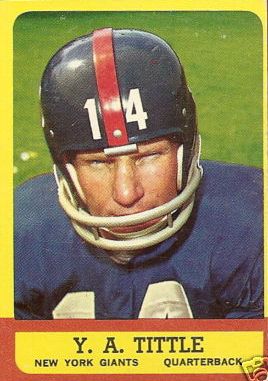
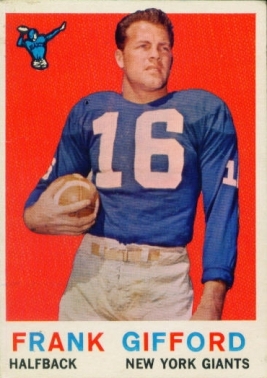
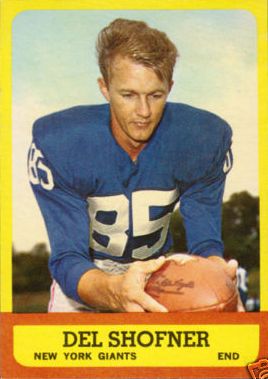
The traditionally defensive-minded Giants have led the NFL in scoring only four times in their storied 83-year history and only once since 1933, when Pro Bowlers Y.A. Tittle, Frank Gifford, Del Shofner and the 1963 Giants outscored their nearest competitor (Jim Brown and The Cleveland Browns) by 105 points. 1963 marked the end of the Giants' incredible run of six Championship Game appearances in eight years (five of which they lost), and following their crushing, season-ending 14-10 defeat at the hands of the Chicago Bears they did not return to the playoffs again for 17 years. But 1963 was a glorious year for Tittle who, in the midst of a memorable 4-year renaissance in New York shattered the single-season record for touchdown passes with 36 (a record that would stand until 1984) and at age 37 was named the league's Most Valuable Player by the Associated Press.
Outstanding quarterback play was also at the center of the Giants previous three scoring titles. Decades earlier, when the Giants led the fledgling league with 312 and 308 points in 1929 and 1930 respectively, they were led by Benny Friedman, the celebrated University of Michigan All-American and the game's first great passing quarterback. So enamored with Friedman's abilities on the football field and potential draw as a Jewish sports star in the New York market, Giants' owner Tim Mara purchased and immediately disbanded Friedman's team, the Detroit Wolverines, for $3,500 (seven times what he paid for the rights to the New York franchise four years earlier) in order to obtain him after Detroit's owners, sensing Mara's desperation, refused trade offer after trade offer.
 The season before, 1928, Friedman became the only player in NFL history before or since to lead the league in both passing and rushing touchdowns. And Mara's investment paid off instantly in 1929, as Friedman's league-leading 20 touchdown passes were 14 more than Ernie Nevers, who finished second, tallied. "It is no exaggeration," wrote Friedman biographer Murray Greenberg in his new book Passing Game, "to say that Benny's 20 touchdown passes in 1929 were every bit as astounding and groundbreaking an achievement as was Babe Ruth's 60 home runs hit two years earlier."
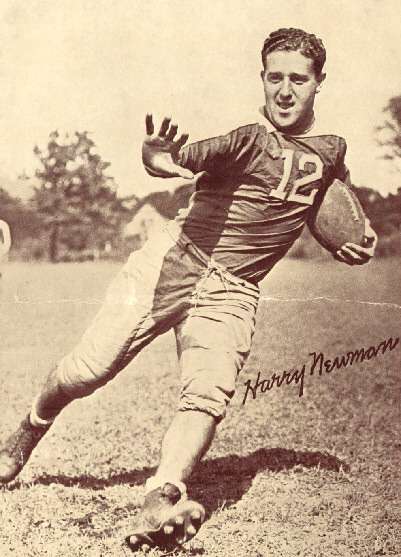
After a contentious financial dispute with Mara, Friedman bolted for the nearby Brooklyn Dodgers in 1932. But Mara exacted a measure of revenge a year later by signing Friedman's protege, the 5'8, 179 pound fellow Michigan man (and tribesman) Harry Newman, who as a rookie in 1933 led all NFL quarterbacks in pass attempts, completions, passing yards and passing touchdowns, in addition to leading the Giants to the league's scoring title for the third time in four years.
Why the history lesson? Well, not just to show off some of what I've learned reading Greenberg's exhaustively researched book (a full review is forthcoming once I've finished it) but also to illustrate just how long it's been since the New York Giants were a true offensive powerhouse.
One scoring title in the last seventy-five years? No Pro Bowl wide receivers in forty years (Homer Jones, inventor of the spike)? It hasn't exactly been the Greatest Show on Turf, now, has it?
It brings me no joy to also note that the Giants failed to win the championship all four times they've led the league in scoring. They lost in the Championship Game to George Halas and his Chicago Bears in 1933 (in the first ever Championship Game) and again in 1963, and they finished second (to Green Bay) in 1929 and 1930, too, back when the NFL Champion was still determined by the season-ending standings.
Additionally, you'll have to go back to 1999, when the St. Louis Rams narrowly defeated the Tennessee Titans in the Super Bowl, to find the last NFL scoring champion to also lay claim to the Lombardi Trophy. So even though the Giants do appear to have a formidable defense to match their suddenly prolific offense I wouldn't start printing up any "Back-to-Back Champion" t-shirts just yet if I were you. Just remember what happened last year. Championships aren't won in the regular season, and anything can happen when you get to the playoffs. Just ask Tom Brady.
Still, it's remarkable what this offense has been accomplishing lately. Thirteen different Giants have found the end zone so far this season (yes, even Sinorice Moss). Brandon Jacobs, arguably the most punishing runner the NFL has seen since Earl Campbell, has found it a league-leading* 11 times while trucking rival defensive backs at an alarming rate.
And even though Eli Manning has thrown for less than 200 yards in six consecutive games and Plaxico Burress, the Giants top receiver, hasn't really gotten it going, the offense (with the exception of their inexplicable stumble in Cleveland) hasn't suffered as a result. Relying instead on their league-best rushing offense (5.3 YPC), the Giants have run the ball for 200 plus yards in each of their last three games despite facing the tough defenses of both the Eagles and Ravens (#1 against the run coming in) over that stretch. This is the first time the Giants have accomplished this since 1952, Frank Gifford's rookie year.
They're on pace to finish the season with 467 points, which would easily break the team record (set in 1963) of 448. And really, it all starts with the play of the offensive line. Those guys are just going out and mashing their opponents each week. It's almost unfair, the holes they're opening up for Earth, Wind & Fire. They're the kinds of holes Gifford could run through even now, and he's 78 years old.
And all of this is just to say enjoy it while it lasts, Giants fans. Do yourselves a favor and savor this season, because you might not see another one like it for a very long time.
_____________________________________________________________
* Tied with Lendale White and Maurice Jones-Drew
Exclusive Interview with Ralph Vacchiano of the New York Daily News
Thursday, October 2, 2008 |

For a guy who's much more used to asking questions than answering them, New York Daily News Giants beat reporter Ralph Vacchiano sure has been granting a lot of interviews lately. In addition to dozens of recent radio appearances, he's talked to G-Men HQ, My Team Rivals and Gelf magazine in the past few weeks alone, and his celebrity appears to be growing exponentially.
Perhaps it has something to do with the recent release of his first book, Eli Manning: The Making of a Quarterback, an outstanding book which Sports Illustrated's Peter King called "a must-read for Giants fans."
Perhaps it's because Ralph has emerged as a breakout television star of the highest order.
Or maybe it's just because he pens what is by far the finest Giants-specific blog on the internet (this one included).
Our colleagues at The Sports Hernia Blog have their own theory, as well.
But whichever the reason for Ralph's sudden ascent into media super-duper-stardom, we here at Bluenatic were mighty pleased when he agreed to grant our little blog an interview of its very own.
Here it is, unedited in its entirety.
***
MW: I understand that you grew up a Giants fan in Oakdale, L.I. Who were your favorite Giants players as a kid? Are there any specific memories of Giants fandom that stick out to you from your youth?
RV: Probably the biggest memories are more personal than they are specific to the team. I recall watching the games with my dad, with him laying on the floor in front of the TV and me either leaning on him or sitting over on the couch. I was a fan of all sports, but I was way more into baseball (Mets) and hockey (Islanders) when I was growing up. I enjoyed watching football when I was real young, and I think I may have had a Steelers jersey at one point. But I didn’t become a serious football fan until I was in my teens. And of course, that coincided with the Giants’ revival and the arrival of Phil Simms and LT, who in turn became my two favorite players. Those teams were so great, and it was in my formative years as a fan, so there was almost no way I could avoid rooting for the Giants. Of course, it helped that my dad was a long-time Giants fan, too.
I suppose I should mention one other specific memory, which sort of makes me a footnote to a footnote in Giants history. I was in the marching band when I attended Connetquot High School out on Long Island and we were selected to play the national anthem and perform the halftime show at the Giants’ final game of the 1986 regular season – a rollicking, 55-24 win over the Green Bay Packers that sent them on to the postseason and, of course, their first Super Bowl championship. That was my first Giants Stadium experience, sitting on metal bleachers in the end zone, freezing my butt off in a very dorky band uniform. It’s strange. The contributions of the Connetquot Thunderbird Marching Band are rarely mentioned when the stories of the ’86 team are told.
I suppose I should mention one other specific memory, which sort of makes me a footnote to a footnote in Giants history. I was in the marching band when I attended Connetquot High School out on Long Island and we were selected to play the national anthem and perform the halftime show at the Giants’ final game of the 1986 regular season – a rollicking, 55-24 win over the Green Bay Packers that sent them on to the postseason and, of course, their first Super Bowl championship. That was my first Giants Stadium experience, sitting on metal bleachers in the end zone, freezing my butt off in a very dorky band uniform. It’s strange. The contributions of the Connetquot Thunderbird Marching Band are rarely mentioned when the stories of the ’86 team are told.
MW: You attended the famed S.I. Newhouse School of Journalism at Syracuse University
RV: Thanks. And it’s for the best because my opinion of Greg Robinson’s Orangemen and the current state of the Syracuse
I’m not sure how old I was when I gave up on my ill-fated dream of playing centerfield for the Mets and realized that maybe I should be writing about sports instead. I have a vague memory of starting to write my first book when I was in sixth grade. Really. It was about hockey and I’m pretty sure all the characters were named after my sixth-grade classmates. I’m also pretty sure I never got past the first two pages. I also know that I started writing for newspapers in seventh grade, when I joined the staff of theOakdale-Bohemia Junior High School
As for my experience at Newhouse, I’m not sure this is an opinion that’s going to get me the alumni club’s Man of the Year Award, but I leftSyracuse Syracuse
I’m not sure how old I was when I gave up on my ill-fated dream of playing centerfield for the Mets and realized that maybe I should be writing about sports instead. I have a vague memory of starting to write my first book when I was in sixth grade. Really. It was about hockey and I’m pretty sure all the characters were named after my sixth-grade classmates. I’m also pretty sure I never got past the first two pages. I also know that I started writing for newspapers in seventh grade, when I joined the staff of the
As for my experience at Newhouse, I’m not sure this is an opinion that’s going to get me the alumni club’s Man of the Year Award, but I left
MW: When you became the beat reporter for the Giants, did you find it difficult to separate the fan in you from the objective journalist you were trained to be? Is this something you still struggle with at times? If so, what was the experience of Super Bowl XLII like for you? Was there at least a little bit of cheering in the press box? And is there ever a situation in which it's appropriate for a beat reporter to act like a fan?
RV: I don’t think I ever really struggled with it, and it shouldn’t be difficult if you’re good at your job and professional about it. Plus, I’ve never thought being a fan was necessarily a bad thing. No, you can’t be a true fanatic and wear Giants clothing into the locker room, or stand up and cheer in the press box or high five the players. But being a Giants fan allows me to feel the joy and frustration that my readers feel, and to understand what different events and issues mean to them. I think that’s pretty important.
One of the best compliments I got in this business came at the end of my first year at the Daily News, when I was covering the Islanders – probably the least significant pro sports beat at the paper. My boss told me “You cover this team like you think it’s the Yankees.” His point was that I worked hard at it and made it seem important, even though in the big picture it probably wasn’t. That’s because I was an Islanders fan. Every win and loss was meaningful to me. Every little story line was significant to me. So I’d fight to get them in the paper because I knew the little stuff meant something to Islanders fans. And I think my readers appreciated that. In the same way, I don’t think I was a very good Devils beat writer for my three years on that beat, because I was completely unaffected by what the Devils did. When they won the Stanley Cup, I was excited to be covering it and I obviously knew it was important, but I didn’t feel the joy the way their fans did.
Now that I’m on the Giants, I really do totally relate to what Giants fans feel. I may not agree with them all the time (and certainly vice versa), but being a fan gives me a look at the perspective of my readers. And it definitely helped with the coverage of the whole Super Bowl XLII run. I knew the emotions Giants fans were feeling. I knew the frustrations from previous seasons, the doubts they had in Eli Manning and the team, the passion and excitement and pride they felt in the defense. It was probably very subtle, but I think my stories reflected that understanding.
Unfortunately for me, I didn’t get to experience any of that directly during the Super Bowl run. I’ve said many times before that I’m jealous of my Giants fans friends, who got to simply be fans during that wild, unexpected ride. I couldn’t do that. I had to work. I had to be focused on work. Sure, I marveled at what was happening and felt my nerves tingle occasionally. But my adrenaline couldn’t be channeled to a celebration. It had to be channeled towards the business at hand. So no, there was not even a little bit of cheering in the press box for me. As the final minutes of Super Bowl XLII was winding down and Giants fans were jumping out of the edge of their seats, I was simultaneously writing two game stories – one if the Giants came back and held on to win, and one if they didn’t. And then I was just trying to make sure I didn’t send in the wrong one.
MW: In his new book, A Team To Believe In, coach Coughlin wrote that prior to the 2007 season he held private, one-on-one meetings with various local beat reporters, in an effort to improve his relationship with the media. He mentions Neil Best of Newsday by name, but not the other reporters. Were you one of the reporters who met with Coughlin? If so, what was that meeting like? Was he as intense as one might imagine? And did the meeting have any effect on your professional relationship with coach Coughlin moving forward?
RV: Yes, I was one of the reporters and I thought those meetings were “off the record.” Funny, usually it’s the reporters who are accused of violating the “off the record” code (whatever that is). The meetings were strange. I really didn’t want to take part in it because they were designed to help Tom Coughlin form a better relationship with the media which, in turn, would help him keep his job. It’s not that I didn’t want him to keep his job. It’s just that, as a reporter, that should be of no interest or concern to me. My job is to cover Coughlin and his team, not to help him. If he gets fired or keeps his job, and how he does either is simply news for me to report. Reporters should stay out of the news at all costs and just report it. In this case, we were becoming part of the story.
I really believe that all the writers should have gotten together and said “No, this is not appropriate.” Because it wasn’t. Coughlin’s relationship with the press should have been irrelevant to the press. If he wanted a better one, that was up to him. It wasn’t up to me to go in and help him figure out how. However he acted, he was nothing more than a coach of a team I was covering. It should have stayed like that. Having said that, of course, I did go mostly because this is a competitive market and I didn’t want to be the only beat writer left out. It was scheduled for 30 minutes and I was there for more than an hour, and by then he had already had the discussion five or six times with others. It wasn’t tense or intense, it was an open an honest discussion. Tom did most of the talking while I was there, since he had already gotten an earful on the issues and he had responses prepared.
My only intention going in was to try to give him a better understanding of why the media was there. In his first three seasons, he treated us as a nuisance, with an alarming lack of respect, and a completely lack of understanding of our purpose. He had restricted access in every possible way and his press conferences were often nasty. I wanted to let him know that the reason we’re there and the reason we ask questions is to find out the truth and to relay the story of his team to the fans that pay his salary. If I ask him, “Why didn’t you call a pass there instead of a run?” it doesn’t mean I’m second-guessing him or calling him an idiot. It means I don’t know why he made that call, and I’m pretty sure the fans want to know, so I’m doing the responsible thing and asking. That’s my sole motivation. And I would think it’s in his best interests to have his side of the story out in the media, rather than let us make guesses all the time. I’m not sure he understood that before the meetings. That’s really our only intention every day. To get the truth. To give the readers the real story of what’s happening with the Giants. Not everything is a big conspiracy or an example of the media “trying to stir things up.” But I think that’s the way he saw us. He saw us as an invasion of his privacy. To an extent, he still does. But he’s less nasty about it.
My professional relationship with him is still the same, which is good, though there’s probably a little less of an edge to it. Now, is that because they’ve been winning or because of those meetings? I can’t really answer that. I guess we’ll know for sure the next time things are going badly.
MW: Your first book, Eli Manning: The Making of a Quarterback, was published recently by the good (and devastatingly handsome) people at Skyhorse Publishing. Congratulations. After having researched this book for four years and having covered every snap Eli Manning has taken as a professional quarterback, it's reasonable to assert that you now know more about him than any other journalist working today. So tell me, what's it going to take (short of another championship or an MVP-type season) for the national media to finally get on board with this kid and realize what kind of player he really is? There are a whole lot of writers out there who still aren't sold, who consider what happened back in January and February a fluke. Why do you think so many people want Eli to fail so badly?
RV: Well, first of all I disagree with the premise of your last question. But more on that in a moment. As for what he has to do to get everyone on board, I think more people are sold on him than you think. But the truth is all Eli Manning needs to win everyone over is one good, consistent season. He doesn’t need to rewrite the record books, he just needs to avoid the month-long (and longer) slumps that have often plagued him throughout his career. What he did during the Super Bowl run, even he describes that as “one good month.” In fact, he’s had better months, statistically. But they’ve always been followed not by a bad game, but by a string of bad games. Every quarterback has bad days, but Eli had a habit of stringing them together. He’d toss two interceptions and follow it with a 125-yard passing day, followed by a 39% completion day, followed by four interceptions. Then he’d have a 300-yard game, and then go back into the abyss. It was maddening to watch. Just when you started believing in him, he’d give you three reasons not to. Now this year he’s helped himself with a very strong start to the 2008 season. The real key will come when he has his first bad game. What does he do the following week? And the week after? Can he avoid the slump? If he does, and if his numbers continue to get better, everyone will start to believe.
And I don’t think that anyone wants him to fail. Maybe fans of the Redskins, Cowboys and Eagles, but if you’re talking about the media it's not about “want.” The issue has always been expectations. Because he was a Manning, because he was Accorsi’s hand-picked successor to the legends of Unitas and Elway, because he was a No. 1 pick, because the Giants traded four picks to get him, because he was in New York, because Ben Roethlisberger won a Super Bowl in his second season … because of all of that, Eli had to be great, not good, right from the start. Days after the Draft Day trade in 2004, people were already saying Eli had to win two Super Bowls to justify the trade. It’s ridiculous, but those are the standards by which he is measured. Even if you take away Super Bowl XLII, he has had a very good and very successful start to his NFL career. Unfortunately for him, for most people, it’s not good enough. And the truth is that some of those expectations are set so absurdly high that there will always be a few people that consider him a failure. My advice to everyone else is to ignore those people. The kid pulled off one of the most remarkable Super Bowl runs and Super Bowl upsets we’re likely to ever see. If that’s not enough, then your expectations really are way too high.
And I don’t think that anyone wants him to fail. Maybe fans of the Redskins, Cowboys and Eagles, but if you’re talking about the media it's not about “want.” The issue has always been expectations. Because he was a Manning, because he was Accorsi’s hand-picked successor to the legends of Unitas and Elway, because he was a No. 1 pick, because the Giants traded four picks to get him, because he was in New York, because Ben Roethlisberger won a Super Bowl in his second season … because of all of that, Eli had to be great, not good, right from the start. Days after the Draft Day trade in 2004, people were already saying Eli had to win two Super Bowls to justify the trade. It’s ridiculous, but those are the standards by which he is measured. Even if you take away Super Bowl XLII, he has had a very good and very successful start to his NFL career. Unfortunately for him, for most people, it’s not good enough. And the truth is that some of those expectations are set so absurdly high that there will always be a few people that consider him a failure. My advice to everyone else is to ignore those people. The kid pulled off one of the most remarkable Super Bowl runs and Super Bowl upsets we’re likely to ever see. If that’s not enough, then your expectations really are way too high.
MW: Based on your interviews, observations and interactions with them, who would you say are the most intelligent Giants players you have covered in your twelve plus years on the beat? Conversely, which were the most, um, intellectually challenged?
RV: You know, it’s actually kind of hard to tell who the really smart ones are because most of my conversations over the years with players have centered around football. Some of them have certainly appeared to be very intelligent. Obviously Tiki Barber fancied himself to be smarter than the average football player, and that’s certainly the way he came off. Jason Sehorn was absolutely sure he was smarter than everybody. Kareem McKenzie, the current right tackle, seems to know a lot about a lot more than football. Actually, over the years, most of the offensive linemen I’ve covered have appeared to be very smart, well-rounded and well-spoken. And after researching all that goes into the quarterback position for this book, I’d have to put every quarterback that’s come through the Giants Stadium doors on the “most intelligent” list. The amount of things they have to learn and know would blow your mind.
I’m having a little trouble with this question, though, because it’s hard to separate actual intelligence from football intelligence. For example, I think Antonio Pierce has a brilliant football mind. He really understands the strategies and nuances of the game. But I have no idea how actually intelligent (whatever that means) he is. Plaxico Burress is another example. He doesn’t come off as being very smart, but he’s brilliant when it comes to breaking down and understanding opposing defenses. It’s also hard because in a locker room setting, it’s easy to mistake being soft-spoken or aloof for being dumb, which isn’t fair. Some guys are just quiet and are often unfairly labeled. I’ve pretty much done a nice job of tap-dancing around that question, haven’t I?
I’m having a little trouble with this question, though, because it’s hard to separate actual intelligence from football intelligence. For example, I think Antonio Pierce has a brilliant football mind. He really understands the strategies and nuances of the game. But I have no idea how actually intelligent (whatever that means) he is. Plaxico Burress is another example. He doesn’t come off as being very smart, but he’s brilliant when it comes to breaking down and understanding opposing defenses. It’s also hard because in a locker room setting, it’s easy to mistake being soft-spoken or aloof for being dumb, which isn’t fair. Some guys are just quiet and are often unfairly labeled. I’ve pretty much done a nice job of tap-dancing around that question, haven’t I?
MW: You have taken your fair share of heat from Giants supporters over the years for some of your opinions, especially those related to former Giants tight end Jeremy Shockey. You've also taken some criticism for some of the more sensational headlines that have adorned your articles, such as the infamous "Eli the Terrible" one from last November. Beyond making the important clarification that editors, not reporters, write the headlines, how have you responded to your critics? And do their criticisms ever bother you?
RV: I have critics? I had no idea. Really, I thought everybody loved me.
Getting criticism is never fun, and anyone who tells you that they enjoy it, or even that it doesn’t bother them at all, is probably lying. But it’s part of the business and you learn to deal with it. My way of dealing with it has been to make sure I’m available to answer my critics. I answer every e-mail that I get. Sometimes it takes a while to sort through them, but everyone gets a response eventually. Even the nastiest e-mails that I get, I answer. Most of the time – but not all of the time – people seem surprised that I’ve written back, and their next e-mail is apologetic, or at least toned down. Some people are just nasty no matter what, and I give them their opportunity to rip me, but then eventually I tune them out. But I’m always happy to defend my position, explain my reasons for writing something, answer questions, or whatever. And sometimes I even concede the reader is right. Not all the time, but some of the time.
What really bothers me is the people who don’t bother to contact me. There are a lot of people that just like to talk tough on anonymous message boards and spout out things that aren’t true. Or they get angry when they don’t have the whole story. You mentioned the “Eli the Terrible” headline after last year’s Vikings game. The one that got me in the most trouble, actually, was the “Mad Plax” headline during Super Bowl week – when Plaxico Burress said he thought the Giants receivers were better than the Patriots receivers in some ways and it became front and back page news in the Daily News. Well, my story was completely fair and accurate (even Burress acknowledged that), but the headline was way too big, misleading and out of context. And not only do I not write the headlines, but I was furious about it. Anyone who bothered to e-mail me found that out.
As for my opinions on Shockey … well, I think my readers expect and appreciate my honesty. I thought he was a disruptive influence on Eli Manning, a bad guy, and what he did during the offseason (basically forcing a trade by throwing tantrums) was child-like behavior and the Giants are better off without him. I’m not going to not tell you that just so I don’t bother people. I’m going to tell you what I think. And if someone’s bothered by that, they can feel free to e-mail me and debate the point. It could even be a fun exchange. But I’m not going to shy away from that opinion if the subject comes up. And unfortunately, the subject will come up because how the Giants play without Shockey is one of the more important storylines, in my opinion, this year.
MW: As a journalist who has one foot in the print world (beat reporter) and the other in the online world (blogger), what do you make of the semi-recent clash between Friday Night Lights author Buzz Bissinger and former Deadspin.com editor Will Leitch over the future of sports journalism and the role of blogs? Do you, like former Chicago
RV: I saw that exchange between Bissinger and Leitch, and I completely agree with the points Bissinger was trying to make. I just wish he made them in a more professional manner. If his point was that blogs too often show a lack of professionalism and dignity, by resorting to cheap shots, bad language and lots of innuendo … well, he certainly showed that he’s capable of getting down in that mud and muck, too. His point should have been that there are some extremely talented writers online who are becoming more “mainstream” (whatever that is) every day. But they do themselves a disservice when they resort to the cheap laugh or sophomoric humor instead of making an intelligent point. Sometimes those blogs and websites – including Deadspin – come off as mean-spirited, as if their entire purpose is to be nasty and embarrass someone. That’s probably why they’re so popular, but I can’t respect them when they do that. I would argue it’s pretty easy to sit in your basement and take basically anonymous shots at people when you don’t have to actually face them. Anybody can do it. And that’s being proven by the massive number of similar websites that seem to pop up all around.
The newspaper business is a struggling and changing industry, not a dying one. It was very late in adjusting to the modern world, and is only now beginning to realize what it has to do. Small newspapers are dying and the bigger ones are seeing a drop in circulation, so they’re focusing more attention on the internet. At the Daily News, we do blogs, video reports, audio reports, live chats, and whenever there’s breaking news it immediately goes up on the website and is updated several times throughout the day. It’s a ton more work for the writers (for not a dime more in pay) but those of us who are good at and care about our jobs are willing to do it. And newspapers still employ the reporters that get the news for everyone else. Kill off all the newspapers and where will Deadspin get its information? What will Jay Marriotti have to yell about on TV? The people in the Giants locker room every single day are still the newspaper reporters, and that’s true with every team and every sport. And it’s even more true in news departments, where the newspaper reporters are the ones talking to government officials, digging through records, and doing important investigative work. Without newspapers, there would be a lot less going on for people on TV and the internet to talk about. The industry definitely had to change to survive. But it’s far from dead.
The newspaper business is a struggling and changing industry, not a dying one. It was very late in adjusting to the modern world, and is only now beginning to realize what it has to do. Small newspapers are dying and the bigger ones are seeing a drop in circulation, so they’re focusing more attention on the internet. At the Daily News, we do blogs, video reports, audio reports, live chats, and whenever there’s breaking news it immediately goes up on the website and is updated several times throughout the day. It’s a ton more work for the writers (for not a dime more in pay) but those of us who are good at and care about our jobs are willing to do it. And newspapers still employ the reporters that get the news for everyone else. Kill off all the newspapers and where will Deadspin get its information? What will Jay Marriotti have to yell about on TV? The people in the Giants locker room every single day are still the newspaper reporters, and that’s true with every team and every sport. And it’s even more true in news departments, where the newspaper reporters are the ones talking to government officials, digging through records, and doing important investigative work. Without newspapers, there would be a lot less going on for people on TV and the internet to talk about. The industry definitely had to change to survive. But it’s far from dead.
MW: It's no secret that despite their denials, a lot of players read the papers. And they're not going to like everything they read. As a result, have you ever had any heated confrontations with players in the locker room, similar to the Antonio Pierce air horn or Michael Strahan donut incidents from the past few seasons? If so, please share. If not, feel free to relay the story of a particularly entertaining (or scary) confrontation you might have witnessed. Did it ever get Bonilla/Klapisch in there?
RV: Well, first of all, I was there for both of those Giants incidents and neither was close to approaching what I’m told the Bonilla-Klapisch episode was. That, apparently, was ugly and scary. The Strahan and Pierce things were also much different. Antonio Pierce was really, seemingly just trying to have some fun. Strahan was angry (by the way, it was peanut butter and jelly spewing from his mouth, not a donut), but he wasn’t physically threatening the reporter (Kelly Naqi from ESPN).
Personally, I’ve had only three times that I can recall a player getting angry with me and confronting me over something that appeared in the paper. One was a story on the poor play of the Giants’ defense that angered Strahan. It turned out that what really angered him, though, was that he was pictured with the story, which he somehow took as a sign that the story was all about him. I explained that I had no input into what picture ran with the story and that the story was fair, and that was it. Another incident was after a story I wrote at the end of Coughlin’s first tumultuous season. I interviewed a bunch of Giants about whether free agents would want to come toNew York
The common thread in those three instances is that while the players were angry, they were never physically threatening or obviously trying to intimidate. They were very professionally expressing their anger. And I welcomed that. In fact, I wish more players would. Much like I’d rather a reader e-mail me than post something anonymously on a fan site, I’d rather have a player confront me than privately stew about something I wrote. I’m happy to admit if I’m wrong. Really. And I might even run a correction (which is much easier to do now that I have a blog). I welcome any discussion or debate of the issues. I want to get things right, and if I don’t I should be told that I didn’t.
Oh, that reminds me, I forgot one other confrontation. It was in Tom Coughlin’s first or second training camp. I wrote a story about how, after a preseason game, Coughlin wasn’t pleased and he was more interested in the things his team did wrong in that game. The headline on the story was: "Tom Focuses On The Negative." Coughlin was mad and said something to me. I told him that writers don’t write their own headlines. He said, “A writer told me that 15 years ago. It was a lie then, and it’s a lie now.” Some people, I guess, are never going to believe me.
Personally, I’ve had only three times that I can recall a player getting angry with me and confronting me over something that appeared in the paper. One was a story on the poor play of the Giants’ defense that angered Strahan. It turned out that what really angered him, though, was that he was pictured with the story, which he somehow took as a sign that the story was all about him. I explained that I had no input into what picture ran with the story and that the story was fair, and that was it. Another incident was after a story I wrote at the end of Coughlin’s first tumultuous season. I interviewed a bunch of Giants about whether free agents would want to come to
The common thread in those three instances is that while the players were angry, they were never physically threatening or obviously trying to intimidate. They were very professionally expressing their anger. And I welcomed that. In fact, I wish more players would. Much like I’d rather a reader e-mail me than post something anonymously on a fan site, I’d rather have a player confront me than privately stew about something I wrote. I’m happy to admit if I’m wrong. Really. And I might even run a correction (which is much easier to do now that I have a blog). I welcome any discussion or debate of the issues. I want to get things right, and if I don’t I should be told that I didn’t.
Oh, that reminds me, I forgot one other confrontation. It was in Tom Coughlin’s first or second training camp. I wrote a story about how, after a preseason game, Coughlin wasn’t pleased and he was more interested in the things his team did wrong in that game. The headline on the story was: "Tom Focuses On The Negative." Coughlin was mad and said something to me. I told him that writers don’t write their own headlines. He said, “A writer told me that 15 years ago. It was a lie then, and it’s a lie now.” Some people, I guess, are never going to believe me.
MW: It has been well documented here on this site that my father has held Giants season tickets since 1964. This is his 45th year. With the new stadium set to open for business in 2010, my father and countless other long-standing season ticket holders are now facing the harsh reality of exorbitant Personal Seat Licenses. In our case, we're going to have to come up with $40,000 if we want four comparable seats in the new building. Others will have to pay even more. Considering how much the Giants and Jets stand to make in naming rights, sponsorships and other new revenues generated by the new stadium, do you think that the Giants made the right decision to charge PSLs, or is this just another example of corporate greed? Sports as big business. Additionally, how do you think the Giants might have handled this situation differently if Wellington
RV: This is an enormous example of corporate greed and I think things would be much, much different if Wellington Mara were still alive. First of all, let’s call it like it is. The Giants and Jets aren’t selling PSLs to help them cover the costs of a new stadium. They’re selling PSLs to ensure that they’re going to make an enormous profit with the new stadium. They could cover the costs of construction with loans, advertising, naming rights, ticket prices, suite sales, and dozens of other revenue streams. But they wouldn’t be able to make hundreds of millions of dollars in profits by doing that. Now, it’s their right to make a profit. But they do it at the expense of people like you and your father. So loyalty – something Wellington Mara was famous for – is now gone. Greed is in. That’s fine. But like I said, let’s just call it like it is.
Having said that, I have two thoughts on this. The first is that I think PSLs are a scam and should be outlawed. It’s a ripoff for fans that you have to pay for the right to pay for tickets. Where else is that practice acceptable? You wouldn’t pay for the right to buy a car, or pay for the right to shop at a grocery store, would you? But they’re counting that you’re so emotionally tied to the Giants that you’ve got no choice. It’s not like you can say “Screw them. I’m a Jets fan now.” Sports fans are stuck, and the owners know it. So rather than thank their loyal customers, they’re going to take advantage of you instead.
My second thought is one you’re not going to like, though: It’s life. Prices go up. Way up. And just because you’ve had tickets for 45 years doesn’t mean you have a right to have them at a low cost for a 46th. It’s hard, but think of it from the perspective of someone on the waiting list who has been waiting for decades. This is the free-market system giving him a shot to finally get Giants tickets. If people are willing to pay $40,000 for two seats, why shouldn’t the Giants charge that? They’ve done their research. They know they could’ve charged $40,000 for every seat in the stadium and they still would’ve sold out. The demand is that high. And in every other business, people are allowed to charge what consumers are willing to pay. Plus, don’t you have the opportunity to move upstairs for $38,000 less? Who says you have the right to first-level seats forever? I used to sit in the Field Box at Shea all the time. Now I can barely afford the upper deck. Who knows what I’ll be able to afford when the Mets move to CitiField? But that’s life. My choice is pay it or don’t pay it. Complaining about it is pointless when plenty of people are willing to shell out unreasonable bucks.
It’s not that I’m unsympathetic to your plight. I think it sucks. I’m a fan, too. I pay to go to non-Giants events. I think the fan – the loyal, middle-class fan – is being constantly screwed. And because of that, I doubt our children will grow up to be sports fans like we were. When I was in high school, my friend s and I would take the train to Shea and see the Mets every Saturday they were home. Tickets were $5. How can kids today do that when the lowest-priced ticket is probably at least $20, maybe more? So I understand. It’s wrong and the owners should be ashamed of themselves for what they’re doing. I just see both sides. There’s no doubt sports fans are getting totally screwed. But really, sports owners are just catching up to the rest of the world with their screwing. It is what it is, as someone famous once said. The only way to stop it is to stop paying to go to games. And so far, fans in general haven’t been willing to take that drastic step.
Charley Conerly: December 3, 1956
Monday, July 7, 2008 |

I'm turning thirty-three this week.
Facing that formidable round number, immortalized by such Giant "greats" as George Adams and Delvin Joyce, I've come to the sobering realization that I'm now older than all but four of the eighty-one players the Giants will bring to training camp this summer: Jeff Feagles (42), Amani Toomer (34), Sam Madison (34), and Renaldo Wynn (34). I've only got two months and a day on Sammy Knight, and he's closing fast.
Thirty-three certainly ain't what it used to be. By the time my old man (the original Bluenatic) was my age, he was already married with two kids, had a house in the suburbs, two cars, and was seven years removed from the completion of his military obligations. He was, by all accounts, a legitimate adult in the world; mature, regardless of what my mother might say to the contrary.
But me, I'm still a work in progress, which means it's a good thing I'm not an NFL player.
In the NFL, thirty-three is an age at which many players retire. Some manage to hang on for a few more seasons, but the odd Bruce Matthews or Darrell Green aside it's the rare NFL player who makes it past thirty-five these days. My childhood heroes, Lawrence Taylor and Harry Carson, retired from pro football at age thirty-four and thirty-five respectively. Defensive stalwarts Leonard Marshall, Carl Banks and Jessie Armstead all hung them up at thirty-three exactly, several years past their primes. Rodney Hampton and hundreds more never even sniffed thirty; some because of injuries, some because of performance, and some because they just couldn't get their shit together.
Needless to say, it's a young man's game. And by the time former Giants quarterback Charley Conerly was thirty-three, he was ancient. Or at least he looked ancient; hardly the type likely to blend in with my peer group.
"Chuckin'" Charley became the first of nineteen identifiable New York Giants to appear on the cover of America's preeminent sports weekly, Sports Illustrated, when this issue hit newsstands on December 3, 1956. The Giants were eighteen years removed from their last championship at the time, and hadn't been to the playoffs in six seasons. But behind the inspired play of their fearsome defense and Pro Bowl offensive stars Frank Gifford and Kyle Rote they won six of their first seven games to open the season. And by the time the rival Bears visited Yankee Stadium in November, three days after Thanksgiving, Sports Illustrated dispatched reporter Tex Maule and photographer John G. Zimmerman to the Bronx to cover the game and to capture the veteran quarterback that had led the upstart Giants to the top of the NFL's Eastern Division.
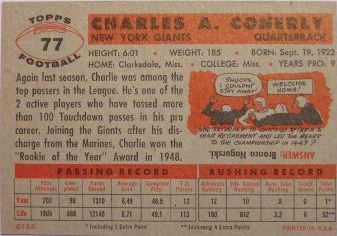
There is some conflicting information on the subject of Conerly's exact age at the time. In his story's second paragraph, Maule reports that Conerly is thirty-two years old. Yet Conerly's 1956 Topps card contradicts Maule's report by listing his birthdate as September 19, 1922, making him thirty-four at the time of the photo shoot. And the usually reliable data compilers at pro-football-reference.com say "Chuckin'" Charley's actually a year older than that, listing September 19,1921 as the Mississippi native's born on date. Wikipedia, databasefootball.com, The College Football Hall of Fame and The Mississippi Sports Hall of Fame all agree, which leads me to believe that it's accurate. But whichever is true--whether Conerly was thirty-two, thirty-four or thirty-five in that photo--one thing that's not in question is that his appearance suggests that of a man significantly older than he actually is. And really, it's all in his eyes.
Look into them. They are eyes that reflect the calculated confidence of experience. Eyes that know things, that speak of an innate toughness borne of challenge. They are not eyes that are surprised by things, that convey even the slightest uncertainty of purpose. No. These are eyes that have seen the kinds of battles that make the violent skirmishes of the gridiron seem trivial by comparison.
Conerly served four years with the Marines in the Pacific theater during World War II, achieving the rank of corporal. It was an experience that affected him deeply. "He hardly ever talked about the war," longtime roomate Frank Gifford told Dave Anderson of The New York Times*, "but he was in a few island invasions. He once had his rifle shot out of his hands."
After beginning his collegiate career at the University of Mississippi in 1942, Conerly returned to campus after the war a different man and a different player. He earned All-SEC honors as a single-wing tailback in his first year as a starter, 1946. One year later he'd be selected to the All-America team and finish fourth in the Heisman Trophy voting after setting NCAA single-season records for completions (133), passing yards (1,367) and consecutive passes without an interception (61) while leading the Rebels to their first bowl birth in twelve seasons and their first Southeastern Conference title in school history.
By the time Conerly got to New York as a seventh round pick in 1948, the Giants were still reeling from the gambling scandal that cost them not only the 1946 NFL championship but also their starting quarterback, Frank Filchock, and reserve back Merle Hapes (who preceded Conerly at Ole Miss) to suspensions. The Giants had won only twice in 1947, their 2-8-2 record the worst in Steve Owen's twenty-three years as Head Coach.
With Conerly under center, the Giants improved (marginally) to 4-8 in 1948. But he finished second in the NFL behind All-Pro Sammy Baugh both in completions and passing yards, third in passing touchdowns behind Philadelphia's Tommy Thompson and Baugh, and at the end of the season Conerly was named the league's Rookie of the Year. He topped that with his second straight 2,000-yard passing performance the next season, improving the Giants record by two more wins before breaking through with ten wins, an Eastern Division title, and a Pro Bowl selection in 1950. And beyond that, Conerly's rugged play earned him a reputation throughout the league for being one of its toughest competitors.
 "He played one whole season, '52 or '53, with a shoulder separation," said Gifford.
Listed at six feet even and 185 pounds, Conerly was tiny by today’s standards. In today's NFL he’d be lucky to play cornerback at his size. But by 1956, when Sports Illustrated came calling, he had long since established himself as one of the top quarterbacks in the league. Remarkably, at the end of the season Conerly was voted to his second (and last) Pro Bowl, without having started even one game.
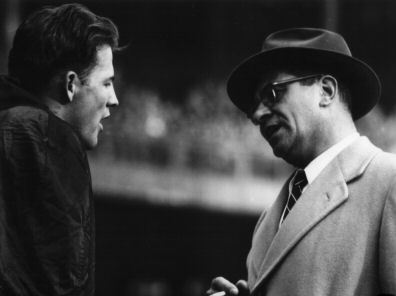
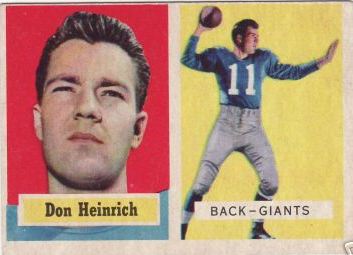
In an experiment conducted for much of the 1955 season and all of 1956, Head Coach Jim Lee Howell and his bright young offensive assistant, Vince Lombardi, used the Giants number two quarterback, Don Heinrich, to start off games. Lombardi would send Heinrich in with a list of plays that, according to Maule, were "designed to test the reactions of the opposing defense so that when Conerly replaced him—usually in the second quarter—he could probe at the obvious weaknesses."
"You don't see much of a game when you're in," Conerly told Maule. "You're looking for the guy you're going to pass to or the guy you're making a hand-off to, and you don't see much else. I guess I wouldn't even recognize half the guys I play against in a game if I saw them on the street afterward. They're just a blur when they are coming in at you, and you don't look at them again until you come out of the huddle. Then they are uniforms in a defense and you don't see faces, just the defense."
Conerly studied the Bears defense from the sidelines for three quarters on November 25, 1956. Though the Giants only managed a tie in that game, Conerly's study and Lombardi's imaginative gameplan resulted in a forty-seven point offensive explosion thirty-five days later in a Championship Game rematch versus the Bears. The score was 34-7 at halftime, and Conerly added two second half touchdown passes (to Rote and Gifford) punctuating the victory to the joy of the 56,836 fans in attendance at Yankee Stadium.
"I got most of the accolades that year," Gifford--the league MVP in 1956--told Anderson, "but we knew who got us there."
Yet despite Conerly's and Gifford's best efforts, neither could get the Giants there again. Nobody could for another thirty years. Instead, the Giants followed up their amazing triumph in 1956 by losing five of the next seven championship games and then missing the playoffs for seventeen consecutive seasons.
The 1957 season included an undefeated November and a 7-2 record before consecutive losses down the stretch to San Francisco, Pittsburgh and Cleveland derailed their playoff hopes. But Conerly and the Giants rebounded in 1958 with nine wins and a shutout of Jim Brown and Cleveland in the Eastern Division Playoff, setting up a championship showdown with the Baltimore Colts in what would later be known as "The Greatest Game Ever Played."
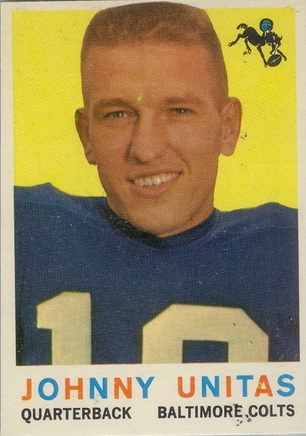
Conerly's fifteen yard touchdown pass to Gifford early in the fourth quarter could have (some believe should have) won the title game in regulation, had it not been for the heroics of the opposing team's quarterback, twenty-five-year-old phenom Johnny Unitas, and an unfortunate spot and measurement on the part of the game officials.
Driving late in the fourth quarter and in a position to run out the clock, the Giants faced a critical third and three on the Colts forty-three yard line. Gifford swept left. With most of the Colts defense reading pass, only future Hall of Fame defensive end Gino Marchetti stood between Gifford and the championship-clinching first down. Marchetti tackled Gifford near the marker as teammate Eugene "Big Daddy" Lipscomb piled on, accidentally breaking Marchetti’s ankle in the process. After Marchetti was taken off the field on a stretcher, the 64,185 anxious Giants fans packed into Yankee Stadium held their collective breath as referee Ron Gibbs spotted the football. They nearly rioted when the subsequent measurement found that Gifford had been stopped inches short of the first down.
To this day, Gifford (now seventy-seven years old) is convinced that he made the first down. He has even made the outrageous claim (in Mark Bowden's new book, The Best Game Ever) that referee Ron Gibbs came up to him after the game was over and admitted that he had blown the call. That confession offered Gifford little consolation then and offers even less now, however, as the Giants were forced to punt. With just under two minutes to play and starting from their own fourteen yard line, Unitas calmly drove the Colts down the field, finding Raymond Berry (another future Hall of Famer) three times on the drive for sixty-five of Berry's astonishing 178 total receiving yards on the day, setting up Steve Myhra (who had had played nearly the entire game at linebacker after Leo Sanford was injured on the game's second play) for a chip-shot field goal to send the game into the NFL's first sudden death overtime.
I think we all know what happened after that.
"Chuckin'" Charley wasn't finished, though. In 1959 Conerly, then thirty-eight years old (or was he 37? 35?), was the N.F.L.'s top-ranked passer and was named the league's Most Valuable Player by the Associated Press. But the Giants lost their title game rematch in
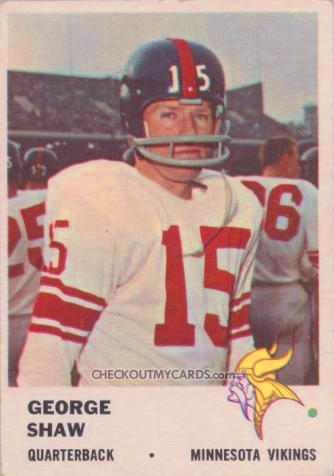
With his production waning in 1960, Conerly found himself sharing time with newcomer George Shaw, the former number one overall pick in the 1955 NFL Draft who had been Unitas’ backup in Baltimore the previous four seasons. The following year--Conerly's last--the Giants brought in thirty-five year old Y.A. Tittle from
"Unlike many of today's players [would have], Charley never complained when Tittle came over," said Wellington Mara, the late Giants' co-owner. "He didn't ask to be traded. He didn't ask for anything."
Instead, Conerly understood the truth of his situation. "If you win," he said, "you're an old pro. If you lose, you're an old man."
At the time of his retirement, Conerly held the franchise records for career touchdown passes (173), completions (1,418), passing yards (19,488) and passing attempts (2,833).* Today, forty-seven years after he played his last game, Conerly still ranks second only to Phil Simms in both career passing yards and touchdown passes. Despite having thrown 1,814 more career passes than Conerly, Simms only threw twenty-six more touchdown passes than "Chuckin'" Charley did over his fourteen years in blue.
And though his playing days were behind him, Conerly continued to appear regularly in Sports Illustrated for the next twenty or so years, his grizzled image spread across the pages of the magazine as one of the very first Marlboro Men, America's archetypal twentieth century tough guy. Fitting.
 Conerly died on Valentine’s Day, 1996, at the age of seventy-four, cruelly, of heart failure. Just three weeks earlier, Dave Anderson had included him in a list of eleven players deserving of Hall of Fame enshrinement.
"Charley is the best player who is not in the Pro Football Hall of Fame," Mara said shortly after Conerly’s death. "He has better numbers than some quarterbacks who are there."
"When I got in, I was embarrassed to be there when Charley wasn't," Gifford added.
* * *
Years later, another Ole Miss quarterback by the name of Eli Manning would twice win the Conerly Trophy (2001, 2003), awarded each year to the best college football player in the state of Mississippi, before leading Conerly's New York Giants to a championship of his own.
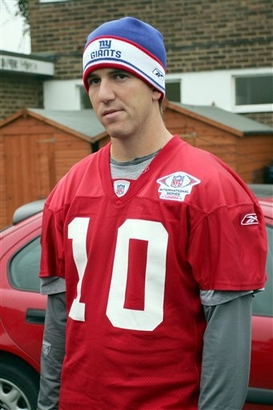
Still a baby-faced twenty-seven-year-old, Manning, too, knows a thing or two about playing with a separated shoulder. Through four seasons as the Giants starter he has proven himself to be one of the most durable quarterbacks in the league, having not missed a single start in that span despite being sacked ninety-three times. But unlike Conerly, whose stare was possessed of an intensity that could melt a glacier, Eli's going to have to work a bit on selling his "serious face." He's significantly more believable when he goes to his trademark "aw shucks face" or even his "pumped the fuck up face." Hell, anything's more believable than his "tough guy face."
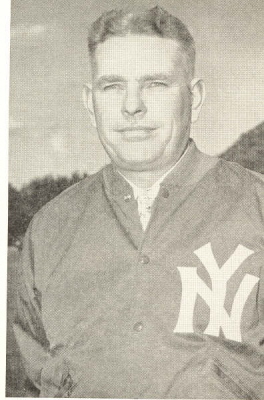
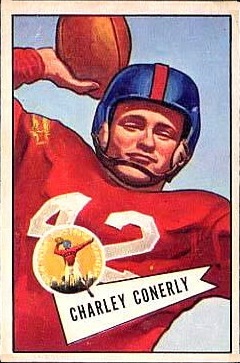
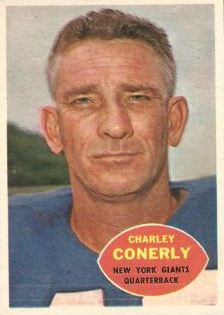
Give the kid some time, though. Conerly was just a rookie when he was Eli's age (or was he?), and it didn't take long for him to go from this to this. A few more rollercoaster seasons in New York and who knows? In five years Eli might look like Brett Favre.
And me? I'll just pretend like that old pro with the leathery visage and salt and pepper hair isn't six years younger than me.
________________________________________________________________________
* Sports of the Times, 2/15/96
* Charley Conerly's career stats
Subscribe to:
Posts (Atom)