Charley Conerly: December 3, 1956

Monday, July 7, 2008 |


I'm turning thirty-three this week. 

Facing that formidable round number, immortalized by such Giant "greats" as George Adams and Delvin Joyce, I've come to the sobering realization that I'm now older than all but four of the eighty-one players the Giants will bring to training camp this summer: Jeff Feagles (42), Amani Toomer (34), Sam Madison (34), and Renaldo Wynn (34). I've only got two months and a day on Sammy Knight, and he's closing fast.

Thirty-three certainly ain't what it used to be.
By the time my old man (the original Bluenatic) was my age, he was already married with two kids, had a house in the suburbs, two cars, and was seven years removed from the completion of his military obligations. He was, by all accounts, a legitimate adult in the world; mature, regardless of what my mother might say to the contrary.

But me, I'm still a work in progress, which means it's a good thing I'm not an NFL player.


In the NFL, thirty-three is an age at which many players retire. Some manage to hang on for a few more seasons, but the odd Bruce Matthews or Darrell Green aside it's the rare NFL player who makes it past thirty-five these days. My childhood heroes, Lawrence Taylor and Harry Carson, retired from pro football at age thirty-four and thirty-five respectively. Defensive stalwarts Leonard Marshall, Carl Banks and Jessie Armstead all hung them up at thirty-three exactly, several years past their primes. Rodney Hampton and hundreds more never even sniffed thirty; some because of injuries, some because of performance, and some because they just couldn't get their shit together.

Needless to say, it's a young man's game.
And by the time former Giants quarterback Charley Conerly was thirty-three, he was ancient. Or at least he looked ancient; hardly the type likely to blend in with my peer group.

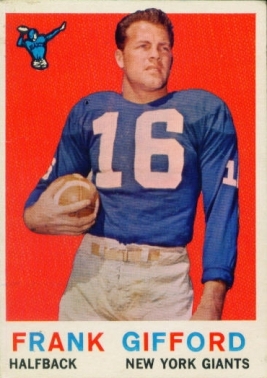
"Chuckin'" Charley became the first of nineteen identifiable New York Giants to appear on the cover of America's preeminent sports weekly, Sports Illustrated, when this issue hit newsstands on December 3, 1956. The Giants were eighteen years removed from their last championship at the time, and hadn't been to the playoffs in six seasons. But behind the inspired play of their fearsome defense and Pro Bowl offensive stars Frank Gifford and Kyle Rote they won six of their first seven games to open the season. And by the time the rival Bears visited Yankee Stadium in November, three days after Thanksgiving, Sports Illustrated dispatched reporter Tex Maule and photographer John G. Zimmerman to the Bronx to cover the game and to capture the veteran quarterback that had led the upstart Giants to the top of the NFL's Eastern Division.

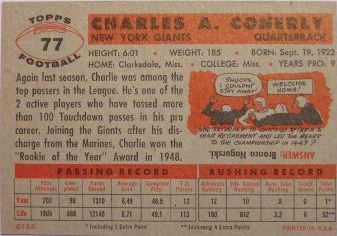
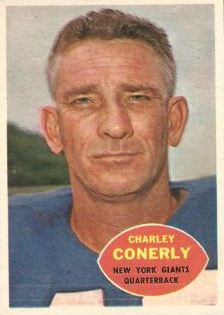
There is some conflicting information on the subject of Conerly's exact age at the time. In his story's second paragraph, Maule reports that Conerly is thirty-two years old. Yet Conerly's 1956 Topps card contradicts Maule's report by listing his birthdate as September 19, 1922, making him thirty-four at the time of the photo shoot. And the usually reliable data compilers at pro-football-reference.com say "Chuckin'" Charley's actually a year older than that, listing September 19,1921 as the Mississippi native's born on date. Wikipedia, databasefootball.com, The College Football Hall of Fame and The Mississippi Sports Hall of Fame all agree, which leads me to believe that it's accurate. But whichever is true--whether Conerly was thirty-two, thirty-four or thirty-five in that photo--one thing that's not in question is that his appearance suggests that of a man significantly older than he actually is. And really, it's all in his eyes.

Look into them. They are eyes that reflect the calculated confidence of experience. Eyes that know things, that speak of an innate toughness borne of challenge. They are not eyes that are surprised by things, that convey even the slightest uncertainty of purpose. No. These are eyes that have seen the kinds of battles that make the violent skirmishes of the gridiron seem trivial by comparison.

Conerly
served four years with the Marines in the Pacific theater during World War II, achieving the rank of corporal. It was an experience that affected him deeply. "He hardly ever talked about the war," longtime roomate Frank Gifford told Dave Anderson of The New York Times*, "but he was in a few island invasions. He once had his rifle shot out of his hands."

After beginning his collegiate career at the University of Mississippi in 1942, Conerly returned to campus after the war a different man and a different player. He earned All-SEC honors as a single-wing tailback in his first year as a starter, 1946. One year later he'd be selected to the All-America team and finish fourth in the Heisman Trophy voting after setting NCAA single-season records for completions (133), passing yards (1,367) and consecutive passes without an interception (61) while leading the Rebels to their first bowl birth in twelve seasons and their first Southeastern Conference title in school history.

By the time Conerly got to New York as a seventh round pick in 1948, the Giants were still reeling from the gambling scandal that cost them not only the 1946 NFL championship but also their starting quarterback, Frank Filchock, and reserve back Merle Hapes (who preceded Conerly at Ole Miss) to suspensions. The Giants had won only twice in 1947, their 2-8-2 record the worst in Steve Owen's twenty-three years as Head Coach.

With Conerly under center, the Giants improved (marginally) to 4-8 in 1948. But he finished second in the NFL behind All-Pro Sammy Baugh both in completions and passing yards, third in passing touchdowns behind Philadelphia's Tommy Thompson and Baugh, and at the end of the season Conerly was named the league's Rookie of the Year. He topped that with his second straight 2,000-yard passing performance the next season, improving the Giants record by two more wins before breaking through with ten wins, an Eastern Division title, and a Pro Bowl selection in 1950. And beyond that, Conerly's rugged play earned him a reputation throughout the league for being one of its toughest competitors.


"He played one whole season, '52 or '53, with a shoulder separation," said Gifford.

Listed at six feet even and 185 pounds, Conerly was tiny by today’s standards. In today's NFL he’d be lucky to play cornerback at his size. But by 1956, when Sports Illustrated came calling, he had long since established himself as one of the top quarterbacks in the league. Remarkably, at the end of the season Conerly was voted to his second (and last) Pro Bowl, without having started even one game.

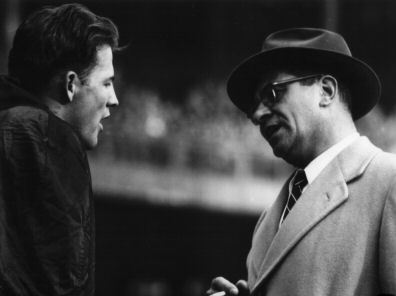
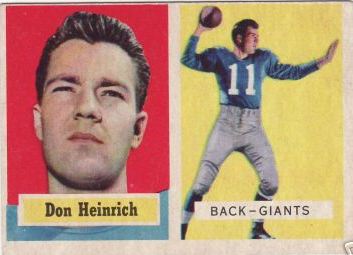
In an experiment conducted for much of the 1955 season and all of 1956, Head Coach Jim Lee Howell and his bright young offensive assistant, Vince Lombardi, used the Giants number two quarterback, Don Heinrich, to start off games. Lombardi would send Heinrich in with a list of plays that, according to Maule, were "designed to test the reactions of the opposing defense so that when Conerly replaced him—usually in the second quarter—he could probe at the obvious weaknesses."

"You don't see much of a game when you're in," Conerly told Maule. "You're looking for the guy you're going to pass to or the guy you're making a hand-off to, and you don't see much else. I guess I wouldn't even recognize half the guys I play against in a game if I saw them on the street afterward. They're just a blur when they are coming in at you, and you don't look at them again until you come out of the huddle. Then they are uniforms in a defense and you don't see faces, just the defense."

Conerly studied the Bears defense from the sidelines for three quarters on November 25, 1956. Though the Giants only managed a tie in that game, Conerly's study and Lombardi's imaginative gameplan resulted in a forty-seven point offensive explosion thirty-five days later in a Championship Game rematch versus the Bears. The score was 34-7 at halftime, and Conerly added two second half touchdown passes (to Rote and Gifford) punctuating the victory to the joy of the 56,836 fans in attendance at Yankee Stadium.

"
I got most of the accolades that year," Gifford--the league MVP in 1956--told Anderson, "but we knew who got us there."

Yet despite Conerly's and Gifford's best efforts, neither could get the Giants there again. Nobody could for another thirty years. Instead, the Giants followed up their amazing triumph in 1956 by losing five of the next seven championship games and then missing the playoffs for seventeen consecutive seasons.

The 1957 season included an undefeated November and a 7-2 record before consecutive losses down the stretch to San Francisco, Pittsburgh and Cleveland derailed their playoff hopes. But Conerly and the Giants rebounded in 1958 with nine wins and a shutout of Jim Brown and Cleveland in the Eastern Division Playoff, setting up a championship showdown with the Baltimore Colts in what would later be known as "The Greatest Game Ever Played."

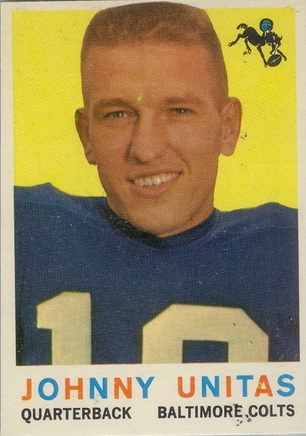
Conerly's fifteen yard touchdown pass to Gifford early in the fourth quarter could have (some believe should have) won the title game in regulation, had it not been for the heroics of the opposing team's quarterback, twenty-five-year-old phenom Johnny Unitas, and an unfortunate spot and measurement on the part of the game officials.

Driving late in the fourth quarter and in a position to run out the clock, the Giants faced a critical third and three on the Colts forty-three yard line. Gifford swept left. With most of the Colts defense reading pass, only future Hall of Fame defensive end Gino Marchetti stood between Gifford and the championship-clinching first down. Marchetti tackled Gifford near the marker as teammate Eugene "Big Daddy" Lipscomb piled on, accidentally breaking Marchetti’s ankle in the process. After Marchetti was taken off the field on a stretcher, the 64,185 anxious Giants fans packed into Yankee Stadium held their collective breath as referee Ron Gibbs spotted the football. They nearly rioted when the subsequent measurement found that Gifford had been stopped inches short of the first down.

To this day, Gifford (now seventy-seven years old) is convinced that he made the first down. He has even made the outrageous claim (in Mark Bowden's new book, The Best Game Ever) that referee Ron Gibbs came up to him after the game was over and admitted that he had blown the call. That confession offered Gifford little consolation then and offers even less now, however, as the Giants were forced to punt. With just under two minutes to play and starting from their own fourteen yard line, Unitas calmly drove the Colts down the field, finding Raymond Berry (another future Hall of Famer) three times on the drive for sixty-five of Berry's astonishing 178 total receiving yards on the day, setting up Steve Myhra (who had had played nearly the entire game at linebacker after Leo Sanford was injured on the game's second play) for a chip-shot field goal to send the game into the NFL's first sudden death overtime.


I think we all know what happened after that.

"Chuckin'" Charley wasn't finished, though. In 1959 Conerly, then thirty-eight years old (or was he 37? 35?), was the N.F.L.'s top-ranked passer and was named the league's Most Valuable Player by the Associated Press. But the Giants lost their title game rematch in Baltimore, 31-16, as Conerly was again outplayed by the amazing Unitas.

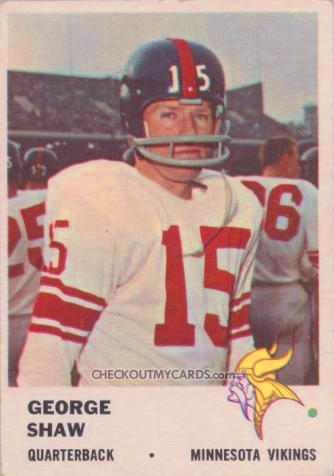
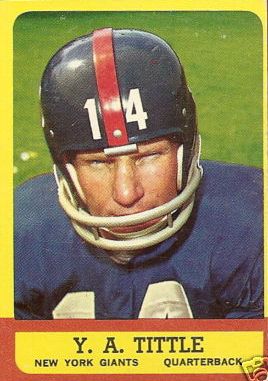
With his production waning in 1960, Conerly found himself sharing time with newcomer George Shaw, the former number one overall pick in the 1955 NFL Draft who had been Unitas’ backup in Baltimore the previous four seasons. The following year--Conerly's last--the Giants brought in thirty-five year old Y.A. Tittle from San Francisco to replace him as the starter. Without as much as a grumble, "Chuckin'" Charley sat behind Tittle (playing sparingly) for that one season before hanging up his spikes and heading home to Mississippi, where he later opened up and operated a successful chain of shoe stores.

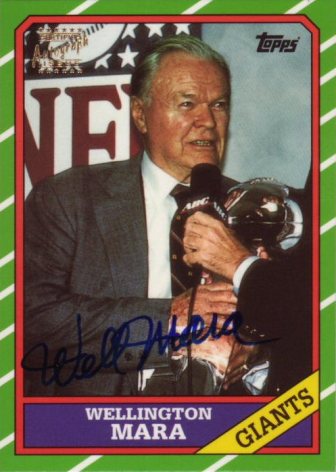
"Unlike many of today's players [would have], Charley never complained when Tittle came over," said Wellington Mara, the late Giants' co-owner. "He didn't ask to be traded. He didn't ask for anything."

Instead, Conerly understood the truth of his situation. "If you win," he said, "you're an old pro. If you lose, you're an old man." 
 

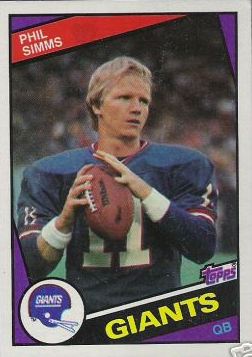
At the time of his retirement, Conerly held the franchise records for career touchdown passes (173), completions (1,418), passing yards (19,488) and passing attempts (2,833).* Today, forty-seven years after he played his last game, Conerly still ranks second only to Phil Simms in both career passing yards and touchdown passes. Despite having thrown 1,814 more career passes than Conerly, Simms only threw twenty-six more touchdown passes than "Chuckin'" Charley did over his fourteen years in blue.

And though his playing days were behind him, Conerly continued to appear regularly in Sports Illustrated for the next twenty or so years, his grizzled image spread across the pages of the magazine as one of the very first Marlboro Men, America's archetypal twentieth century tough guy. Fitting.

Conerly died on Valentine’s Day, 1996, at the age of seventy-four, cruelly, of heart failure. Just three weeks earlier, Dave Anderson had included him in a list of eleven players deserving of Hall of Fame enshrinement. Of those eleven, seven still await their call from the Hall. Conerly once came within two votes of being elected, but, Anderson wrote, “unfairly, he was somehow forgotten.”
 
"Charley is the best player who is not in the Pro Football Hall of Fame," Mara said shortly after Conerly’s death. "He has better numbers than some quarterbacks who are there."
 
"When I got in, I was embarrassed to be there when Charley wasn't," Gifford added.


 *     *     *

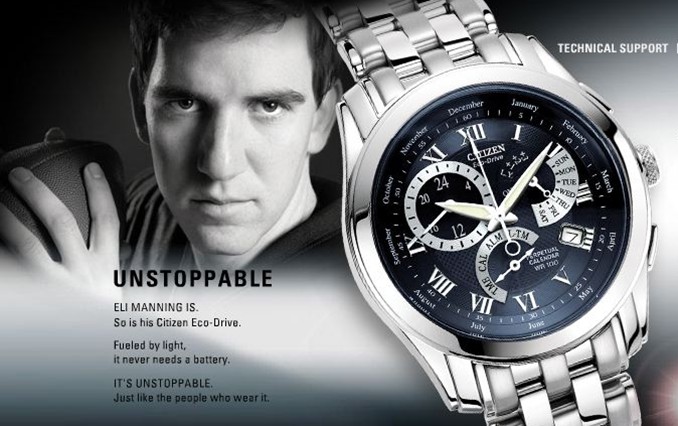
Years later, another Ole Miss quarterback by the name of Eli Manning would twice win the Conerly Trophy (2001, 2003), awarded each year to the best college football player in the state of Mississippi, before leading Conerly's New York Giants to a championship of his own.

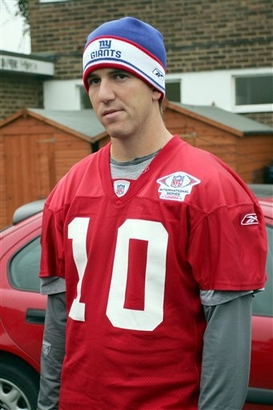
Still a baby-faced twenty-seven-year-old, Manning, too, knows a thing or two about playing with a separated shoulder. Through four seasons as the Giants starter he has proven himself to be one of the most durable quarterbacks in the league, having not missed a single start in that span despite being sacked ninety-three times. But unlike Conerly, whose stare was possessed of an intensity that could melt a glacier, Eli's going to have to work a bit on selling his "serious face." He's significantly more believable when he goes to his trademark "aw shucks face" or even his "pumped the fuck up face." Hell, anything's more believable than his "tough guy face."

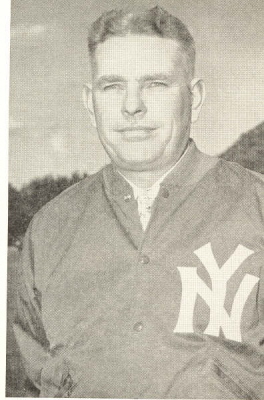
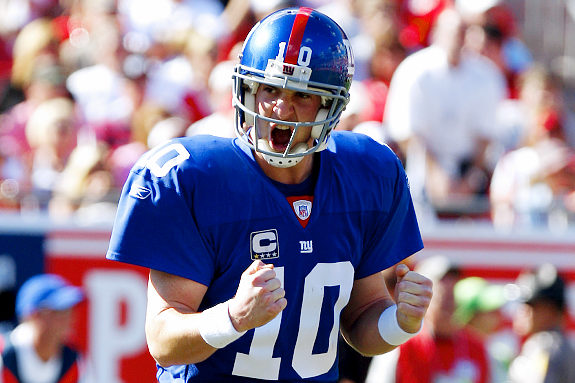
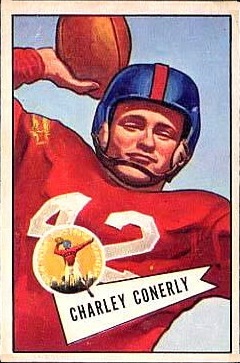
Give the kid some time, though. Conerly was just a rookie when he was Eli's age (or was he?), and it didn't take long for him to go from this to this. A few more rollercoaster seasons in New York and who knows? In five years Eli might look like Brett Favre.

And me? I'll just pretend like that old pro with the leathery visage and salt and pepper hair isn't six years younger than me.

________________________________________________________________________

* Sports of the Times, 2/15/96
* Charley Conerly's career stats

Remembering Rodney: A Bluenatic's Lament

Thursday, April 24, 2008 |

Back when I was fifteen years old, unapologetically mulleted and flush with the robust earnings from a summer spent working three jobs, I purchased my first New York Giants football jersey. While it's true that I had owned and cherished other Giants jerseys prior to this one (a road-white Carl Banks was a personal favorite), this one was special because I bought it with my own money. The Giants then, like now, were the World Champions of professional football. It was a fine time to invest in a jersey. And to me no star on that 1990 Giants team burned with more spectacular intensity than their first round pick that year, running back Rodney Hampton, #27.

Rodney had broken his leg attempting to recover a Jeff Hostetler fumble in what was an otherwise glorious victory over the Chicago Bears in the Divisional Playoff round his rookie year, and therefore did not play in the two epic, historic games that followed. But despite Ottis Anderson's heroics in the Super Bowl that year, and the tens of thousands of #56 and #11 jerseys I saw each and every week (and still see) at the stadium, I picked Rodney. I loved L.T. and Phil Simms, too, (and still do) but I fancied myself a teenage iconoclast of sorts in those halcyon days, and had little interest in donning what I considered to be a uniform uniform.

The Giants selected Rodney with the 24th overall pick of the 1990 Draft, making him the fifth of six running backs taken in the first round that year. His selection came as a surprise to some, as the Giants still had four capable running backs on their roster: the battle tested fan favorite, Joe Morris (albeit recovering from a broken foot); the aforementioned veteran who ten months later would be named Super Bowl MVP, Ottis Anderson; the inconsistent, underachieving Lewis Tillman, and the electrifying offensive and special teams weapon, Dave Meggett.

Also raising eyebrows were the names of the four running backs chosen before Rodney and the one chosen immediately after, as fans, pundits and so-called experts feverishly debated the relative merits of the six players.

In what was perhaps the worst selection in a humiliating series of atrocious draft blunders, the New York Jets chose Blair Thomas second overall, only to watch the disappointing Penn State product score all of five touchdowns in four miserable years in New York before his release after the 1993 season. Darrell Thompson (the 19th pick) and Steve Broussard (the 20th pick) were equally underwhelming pros.

Emmitt Smith, we now know, was the steal of the draft at #17, though I'm sure Denver was pleased with the value they got out of Shannon Sharpe in the seventh round at pick #193. All Emmitt did was go out and make sixteen teams look silly by carrying the ball more times for more yards and more touchdowns than any other player in the history of the National Football League. And kill the Giants repeatedly, unmercifully.

When it came time for the Giants to make their pick at #24, the top two running backs left on the board were Rodney Hampton from Georgia and the speedy yet diminutive back from Florida State, Dexter Carter. With a lackluster 4.65 forty time, Hampton didn't have the breakaway speed scouts lauded in Carter, but his bruising running style was much better suited for the Giants traditional smashmouth, ball control style of offense. And while Rodney was clearly no Emmitt Smith as a pro (even a bluenatic like me will concede that), it is unquestionably clear that George Young and the Giants chose the better of the two running backs available at #24.

Rodney Hampton would go on to post five consecutive 1,000-yard rushing seasons, seventeen 100-yard games, 51 touchdowns, and earn two trips to the Pro Bowl while setting the Giants franchise records for rushing yards with 6,897 (a mark since bested by Tiki Barber) and most seasons scoring ten or more rushing touchdowns (3). Carter, on the other hand--fatefully selected with the very next pick by San Francisco--spent the majority of his NFL career returning kicks to little fanfare and less success. Though he would earn a Super Bowl ring after the Niners' win in Super Bowl XXIX, Carter found the end zone only nine times in seven NFL seasons.

It didn't take long for me (or New York) to fall in love with Rodney, either. On his very first professional carry, in a preseason game at Buffalo, he took a second quarter handoff from "camp body" Scooter Molander and raced 89-yards for a touchdown. It was just a simple draw play. Center Brian Williams and guards Bob Kratch and Eric Moore each made key blocks, helping Hampton get through the line. Once he got to the second level he juked a linebacker, broke the tackle of one Bills safety and escaped the lunge of the other. After that, Hampton was in the clear and outran the pursuing Bills to the end zone. It was beautiful. So much for his lack of breakaway speed.

After the Giants won the Super Bowl later that year, Head Coach Bill Parcells "retired," citing health concerns. But instead of hiring Bill Belichick, the architect of their two championship defenses, to be the next Head Coach, the Maras made the unfortunate decision to promote meek running backs coach Ray Handley (a name I still shudder at the mere mention of), to the coveted position. While Belichick, humiliated, was quickly snatched up by the Cleveland Browns, never to return, Handley made his first order of business the installation of Jeff Hostetler at quarterback over Phil Simms, who had led the team to eleven victories the previous season before getting injured in week 15 in the rain against Buffalo, their eventual Super Bowl opponent.

It is often said that teams reflect the personality of their Head Coach. Under Handley, the Giants went from being the dynamic, fiery unit it was under Parcells to a plodding, uninspired mess. The mild mannered Handley was, to the surprise of no one, ill-fitted to be a Head Coach in New York, and after posting just fourteen wins in two seasons at the helm he was fired, giving way to the disciplinarian, Dan Reeves. Yet while the Handley era is often thought of as one Giants fans would rather forget (and with good reason), they were also the years in which Rodney Hampton first began to flourish, capturing the hearts of the fans with his hard, tough, between-the-tackles running.

In Handley's second season (Hampton's third), an abysmal 6-10 campaign in which the Giants lost six of their last seven games, Rodney rushed for 1,141 yards and scored 14 rushing touchdowns, good for second in the league. His excellent sophomore campaign, in which he posted his first thousand yard, ten touchdown season, had already established him as one of the league's best young runners. But his sensational 167-yard performance against the Cardinals (including a phenomenal 63-yard touchdown run) in week five of 1992 made him a bonafide superstar. And for his efforts, at the end of the year he was the only Giants player honored with an invitation to Hawaii for the Pro Bowl.

Dan Reeves' arrival in 1993 brought the rightful return of the starting quarterback job to Phil Simms who, playing his last NFL season valiantly led the Giants to eleven wins and an unlikely Wild Card berth while earning his second trip to the Pro Bowl. It was a strange year of comings and goings for the Giants--Michael Strahan's and Jessie Armstead's first, Lawrence Taylor's and Mark Collins' (in addition to Simms') last. It was also a time of transition for me, as 1993 marked the year of my graduation from High School and departure to the Midwest for college. But with Simms managing the offense, Rodney pounding the rock and the young defensive stars (Keith Hamilton, then in his second-year, was only 22) beginning to come into their own, the Giants, to the surprise of many (including myself) made a charge to the playoffs, winning six of their final eight games.

And on January 9, 1994, in the Wild Card game against the Vikings at cold and windy Giants Stadium, Rodney enjoyed what was perhaps the finest game of his pro career. With Simms struggling with the wind (he finished with only 94 passings yards) and the Giants trailing 10-3 at the half, Rodney put the team on his back by carrying 33 times for 161 yards and two touchdowns in a thrilling, come from behind 17-10 victory. Rodney's first touchdown, scored on the Giants' first possession of the second half, was a 51-yard dash in which he delivered a vicious stiff-arm to linebacker Carlos Jenkins, rousing the capacity crowd en route to the momentum-turning score. Late in the fourth quarter, on the drive he'd punctuate with what would end up being the winning touchdown, Hampton converted both a fourth and one and a third and two to keep the drive alive.

Little did Rodney know at the time that it would be the last playoff victory of his career, or the last the Giants would celebrate, with and without him, for seven more seasons. Watching Hampton stride triumphantly off the field that afternoon to the deafening roar of the Giants faithful, one would have surmised (and reasonably so) that a performance like that--a true signature performance--would embue a player like Hampton with a confidence in feeling that there would be many more Sunday afternoons like this to come, many more equally punishing stiff-arms to dish out on the way to the opponent's end zone. But it wasn't to be.

The very next week out in San Francisco, the Giants suffered a demoralizing, blowout loss at the hands of the 49ers. The final score was 44-3 and the Giants were never in it. Ricky Watters set a league record with five rushing touchdowns in the game, which was (and still is) the most lopsided postseason loss the Giants have endured in the franchise's storied history. The Niners led 23-3 at the half and took Rodney out of the game early. He finished the game with just 7 carries for 12 yards.

The sting of that embarrassing loss still fresh in his mind, Rodney returned to the Pro Bowl that February with teammates Phil Simms, Bart Oates, and Jumbo Elliott. And in the final seconds of what was an unusually competitive exhibition, Rodney caught a 23-yard Steve Young pass for the tying touchdown, forcing the first overtime in Pro Bowl history. Though Nick Lowery's field goal 4:52 into overtime prevented Rodney from claiming a cut of the winner's share, Giants fans watching the game were sent into the offseason feeling good about their star running back.

Unfortunately, Reeves and the Giants were never able to capture the magic of 1993 again. With Simms retired and the offense placed in the incompetent, mistake-prone (to put it nicely) hands of 1992 Supplemental Draft Pick Dave Brown (perhaps George Young's worst selection in nineteen years as General Manager), the Giants failed to reach the postseason for the next three years. An encouraging 9-7 record in Brown's first season as a starter (1994) proved to be an abberation, and after back-to-back seasons of double-digit losses (1995-6), Reeves was fired. Rodney, never one to publicly gripe, pressed on, once again settling into the thankless role of being the best offensive player on a shitty, rebuilding team. But beyond that he became the face of the franchise in those days, as more and more fans began arriving at the stadium in his #27 jersey.

Despite his popularity and productivity, the Giants rewarded Hampton for his workmanlike 327-carry, 1,075-yard 1994 campaign by selecting his apparent successor, Michigan running back Tyrone Wheatley, with the 17th overall pick of the 1995 Draft and also signing fellow Georgia Bulldog and 1982 Heisman Trophy Winner Herschel Walker, as a free agent. Hampton, as prideful as any Giants player in recent memory, wasn't about to hand his starting job over to anyone, though. Instead, Wheatley's and Walker's presence on the roster only served to motivate him to run harder, as he finished the 1995 campaign with 1,182 yards (his career best mark) and ten rushing touchdowns. What made those numbers all the more remarkable was that Rodney put them up in an otherwise forgettable 5-11 season that began with a torturous 35-0 loss at home to the visiting Cowboys on Monday Night Football and which ended with six defeats in the Giants final eight games.
1995 marked Hampton's fifth consecutive season with at least 1,000 yards rushing, and in March of 1996 the 49ers, who had missed out on selecting him by just one pick seven years earlier, made Rodney a blockbuster six-year, $16.45 million free agent offer. With Wheatley, a first round pick, on the roster and the Giants not expected to be a contender in 1996, few figured the Giants would match the Niners' offer. Most fans, even ardent Rodney supporters like myself, resigned themselves to accept the fact that Hampton had likely played his last game in a Giant uniform.
Amazingly, the Giants chose to match the offer, perhaps recognizing that Rodney was the only truly marketable star in their employ. Strahan and Armstead had yet to blossom into the outstanding players they would each soon become, but Rodney, beloved by the fans, was still a star attraction. The deal included a $3.6 million signing bonus, though his base salary would only be $750,000 in 1996 before escalating to $1 million in 1997.

Unfortunately for Rodney (and the Giants), his production dropped off drastically as he shared carries with Wheatley in 1996, and he posted career lows (his rookie season notwithstanding) in carries, yards, and touchdowns for lame duck Dan Reeves. And as luck would have it, in the season's second to last game--an embarrassing home loss to the hapless New Orleans Saints--Hampton left the contest with what Mike Freeman rather matter-of-factly described in his game report for The New York Times as a "bruised right knee." Nothing much was made of the injury at the time, but perhaps sensing a precipitous decline in Rodney's performance and not quite sold on the enigmatic Wheatley, the Giants used their 2nd round pick (#36 overall) in that April's draft to select Tiki Barber, the shifty little back from the University of Virginia.

Then, in August of 1997, Rodney felt that right knee lock up on him before the third exhibition game, and the very next day he underwent arthroscopic surgery to remove the loose cartilage the Giants' doctors believed was causing the problem. On the day of the surgery, Thomas George reported in The New York Times that Hampton was expected to be out "two to three weeks." Two to three weeks became nearly four months, however, as Rodney didn't return to the field until the Giants hosted Washington on December 13th, with the division title on the line. By that time, fifteen games into the season, Hampton had lost his starting job to an effective rotation of significantly younger backs that included Wheatley, Barber, and Charles Way, an emerging star at the fullback position.

The Giants were a surprising success that year without Hampton, Jim Fassel's first as Head Coach, as with smoke and mirrors they won ten games and became the first NFC East team ever to go undefeated in the division. Mired at 2-3 in early October, Dave Brown injured a chest muscle in the first quarter of the Giants' week six clash with Dallas, opening up the door for the unheralded fourth round pick of the previous year, Danny Kanell. Kanell, a decent game manager if not the most gifted passer, led the Giants to an upset win that afternoon and then to seven more, as he and the Giants captured both lightning in a bottle and the division crown. Brown, who would throw just 40 touchdowns against 49 interceptions in three plus cringe-worthy seasons as the Giants starting quarterback, would never throw another pass in a Giants uniform.

The Giants needed a victory over Washington in the season's penultimate game to clinch their first division title in seven years. Late in the game and protecting a lead, Fassel inserted Rodney in an attempt to run out the clock. He was welcomed by the loudest cheers of the day at Giants Stadium, including the touchdown celebrations and, just as he had time after time for the Giants, calmly proceeded to rush for a critical first down. Years later, Rodney would tell reporters ''for all the 100-yard rushing games I had, it's the Washington game that I'll reflect back to. I appreciated the fans' ovation.''

Sadly for Rodney, his past accomplishments and the fans' adoration did not translate to loyalty on the Giants' behalf. Rodney didn't really fit into Coach Fassel's pass-heavy offensive scheme, and in April of 1998 new GM Ernie Accorsi agreed to terms with the free-agent running back Gary Brown. Just two years after signing his $16.5 million deal, Rodney was released. At one year and $400,000, Brown was a bargain stopgap compared to Hampton's hefty contract, as the Giants continued to develop Wheatley and Barber into every down backs.

"Words come up short when you try to explain what Rodney has meant to the entire organization,'' Accorsi told the assembled press after announcing Hampton's release. ''He has conducted himself with great pride and dignity.''

Hampton
, still confident in his ability to play, said ''I'm playing next year, just not with the Giants. I guess it's kind of sad because I spent a lot of years in New York. I'll miss the Giants, but it's time to move on.''

The Arizona Cardinals and Dallas Cowboys both reportedly inquired with Rodney's agent, Ralph Cindrich, about his services as a possible backup, but no offers materialized. When training camps opened and closed without so much as an invitation, Rodney called it quits. Just like that, his career was over. 

Despite the tremendous ovation he received upon his return, Hampton had gained just 81 yards on 23 carries in the final two games of the regular season. And in the first round of the playoffs, a soul-crushing home loss to Minnesota in which the Giants led by nine points inside of two minutes, he carried only eight times for 18 yards. It was clear that the knee injury, coupled with the punishment he had endured over 2,000 plus NFL touches, caused Rodney to lose a valuable step. At 29, he was headed towards the age in which even the best running backs have seen their productivity decline, and no teams were interested in taking a flier on him.

As a fan, I soldiered on. As a Michigan guy I liked Wheatley, but he was never able to perform at the pro level the way he had seemingly done so effortlessly back in Ann Arbor. He appeared in only five games for the Giants in 1998, carried only fourteen times, and in February was traded to the Dolphins for a 7th round pick in that April's draft. Barber, who would one day break nearly all of Rodney's franchise records, was still a few years away from being a full-time contributor to the offense. And while Gary Brown proved to be a serviceable player (he posted 1,063 yards and a respectable 4.3 yards per carry in 1998), he just wasn't a difference maker of Hampton's caliber. Rodney's loss, both as a player and as a leader, was palpable.

Quarterback Kent Graham, subbing for an injured Kanell, rallied the Giants to four wins in their final five contests, including a thrilling, last-minute victory over the 13-0 and eventual Super Bowl champion Denver Broncos, but it wasn't enough. At 8-8, the Giants missed the playoffs.

The next season, as the Giants trotted out a comical merry-go-round of ne'er-do-well would-be replacements, from Wheatley and Brown to LeShon Johnson, Joe Montgomery, and Sean Bennett, Rodney kind of just faded into obscurity. Unlike his former teammates Lawrence Taylor and Phil Simms, the Giants chose not to honor him in a halftime ceremony or to offer him a job within the organization, as they later did with Charles Way after his injury. And when the Giants selected Ron Dayne, the Heisman Trophy Winner, with the 11th pick of the 2000 draft, they didn't hesitate to assign him Rodney's number.

Why the Giants decided to treat one of their all-time great players like a sack of rotten tomatoes I'll never fully understand. I know that football is a harsh business, and that players get discarded all the time. I learned that the hard way when the Giants unceremoniously cut Mark Bavaro, a guy who had given his heart, soul, and body, to the organization, after his own knee injury. But while Bavaro's release opened my eyes to the realities of life as an NFL (read: Not For Long) player, the Giants' cold treatment of Hampton drove home the truth of the league's prevailing "what have you done for me lately?" mentality.

When asked where he'd rank Hampton among his all-time Giant favorites after Rodney, in his moving return to the field, helped run out the clock in the division clincher in 1997, venerable Giants owner Wellington Mara remarked, ''right now he's at the top.'' The operative phrase in that sentence was "right now," as just four months later Mara and Accorsi determined that Hampton had outlived his usefulness to the Giants organization. And while I am able to view the move intellectually as a business decision driven more by money than any other factor, the Giants handled Hampton's release in a way that, to me, seemed to be in opposition to their long-standing reputation as a "class organization."

Today, ten years after Hampton's release, he is largely forgotten. Plenty of #27 jerseys can still be seen around Giants Stadium these days, but they have a different name on their back now. In the era of free agency and the salary cap, fans have learned to root for the jersey, whoever it is that may be occupying it from year to year. Our loyalties to players wax and wane with each performance and we have become, by and large, an unforgiving lot. Literally.

But with the 2008 draft coming up in two days I'd like to take this opportunity to offer a heartfelt salute to one of the last true Giants--a player whose sterling example, both on and off the football field, deserves far more recognition than it has ever received. On Saturday, as you settle into your couch for the 3 p.m. start of the draft and crack that first beer, please do me a favor and toss one back for old Rodney. And remember, even though you're not fifteen or unapologetically mulleted it's never too late to buy a jersey. I promise you won't be disappointed.

The 15 Worst Giants Losses I Can Remember

Friday, April 4, 2008 |

Nearly nine weeks have passed now since the Giants' stunning win in Super Bowl XLII. They’ve had their ticker-tape parade, their Letterman appearances, and books are forthcoming. They’ve even designed and been fitted for their "ten table" championship rings. And now, with the draft looming in just a few short weeks, they're back to work.

And while I am still very much basking in the radiant glow of this unlikeliest of championships, I have to admit that it's a bewildering feeling. Having gone seventeen years between titles, I'm much more used to being in the position of the loser in this scenario, the fan of the team that wasn't quite good enough to win it all. It's something I've gotten used to.

While the Giants' seven NFL championships rank them third all-time behind Green Bay (12) and Chicago (9) in league annals, it is still a franchise oddly defined more by its historic defeats than by its historic victories. After defeating Green Bay in the 1938 championship game behind two blocked punts and a pair of touchdown passes by quarterback Ed Danowski (a classmate of Wellington Mara's at Fordham), the Giants went on to lose four of the next eight championship games by a combined score of 102-30. Then, after finally recapturing the title in 1956 with a dramatic forty point victory over the rival Bears at Yankee Stadium, the men in blue proceeded to lose five of the next seven championship games including three in a row from 1961-1963. And those were the Giants' last postseason appearances until 1981.

Perhaps it's a good thing that I can't remember any truly horrible Giants losses before 1985, when the outcomes of these games first started to register with me. I wasn't born yet when Alan Ameche plunged across the goalline to win the 1958 NFL championship in what has since been referred to as "The Greatest Game Ever Played." And I was only four years old when Joe Pisarcik fumbled a sure Giants victory away into the eager, opportunistic hands of Herman Edwards. But there have been fifteen signature losses suffered by the Giants over the past twenty plus years that I've been carrying with me ever since, losses I don't think I'll ever be able to shake. And here they are, in no particular order: 

 1) 2002 NFC Divisional Playoff Game - Giants @ 49ers (i.e. the Trey Junkin bad snap/no pass interference called game). It's been five years, and I still get angry whenever I think about this game. I'm angry right now as I type this. First, the Giants blow a 24 point second half lead. Then, a non-call so horrible that after a videotape review the next day, NFL Supervisor of Officials Mike Pereira publicly admitted that the game officials blew the call on the wild play that ended the Giants season. Niners' defensive end Chike Okeafor clearly tackled and dragged Rich Seubert, an eligible receiver, to the ground as he flailed helplessly at Matt Allen's desperation pass in the final seconds. Because a football game can’t end on a defensive penalty, the Giants would have had one untimed down from the spot of the foul (which was somewhere around the Niners' five yard line) had pass interference been called. The league office released an official statement and Pereira actually called and apologized to Wellington Mara, but he couldn’t overturn the call. 39-38.

2)
1989 NFC Divisional Playoff Game - Rams @ Giants (i.e. the Flipper Anderson game-winning touchdown game). After Anderson caught the ball down the right sideline and outran the entire Giants secondary, he kept running straight into the tunnel with the football, the 1989 Giants season, and the last remaining remnants of my childhood. He never came back out. That's the quietest I've ever heard Giants stadium in my life, and I was once there when it was virtually empty. 19-13 OT.

3)
1997 NFC Wild Card Game - Vikings @ Giants (i.e. the Chris Calloway fumble/Jake Reed game-winning touchdown game). The Giants had a nine-point lead with less than two minutes remaining. The next thing you know, the usually sure-handed Chris Calloway muffs an onside kick, Jake Reed gets open in the back of the endzone, and Rodney Hampton's career is over. Eleven years later, my old man still blames my friend Dave Schwartz for this loss. Jinx. Better him than me. 23-22.

4)
1993 NFC Divisional Playoff Game - Giants @ 49ers (i.e. the Giants get blown out in L.T.'s last game ever game). This one hurt because it was a bloodbath. The Giants were never in it at any point, and that's definitely not the way you want the greatest player in franchise history to go out. The Niners ran all over the Giants' defense that day, as Ricky Watters set a playoff record with five rushing touchdowns. 44-3. Ouch.

5)
1985 NFC Divisional Playoff Game - Giants @ Bears (i.e. the Sean Landeta whiffs on a punt game). Take nothing away from the 85 Bears.The Super Bowl Shufflers were a great team, and it was windy and miserably cold in Chicago that day. But anytime you get shut-out in a playoff game, it's gonna sting. The missed punt was embarassing, but not any more so than the Giants' 41 total rushing yards. A beatdown. 21-0.

6)
1989 Regular Season Game - Eagles @ Giants (i.e. the Randall Cunningham 91-yard punt game). The Giants had the lead and had Philly backed up to their own 2-yard line late in the fourth quarter. Then, on third down, Cunningham surprised the Giants with the punt, which, according to Dave Anderson's report in the Times the next day, soared 59 yards in the air (more like 65 counting from where he punted in the end zone), landed at the Giants' 38 and bounced to the 7 before Dave Meggett, who had let the ball bounce past him, returned it to the 16. But two plays later, Phil Simms fumbled, Michael Pitts recovered at the Giants' 7 and three plays after that, Keith Byars (a Giant killer) scored the decisive touchdown. 24-17.

7)
1988 Regular Season Monday Night Football Game - Giants @ Eagles (i.e. the Carl Banks can't tackle Randall Cunningham game). Just watch the video if you don't remember this one. 24-13.

8)
2005 Regular Season Game - Giants @ Seahawks (i.e. the Jay Feely misses 3 game-winning field goals game). I watched this one in a sports bar in Chicago and hurt my foot after kicking a barstool so hard after Feely's 2nd miss that I could barely walk back to my in-laws house afterwards. 24-21 OT.

9)
2003 Regular Season Monday Night Football Game - Cowboys @ Giants (i.e. the Matt Bryant kickoff out of bounds game). The game was all but over. All the Giants had to do was kick the ball in bounds and cover the kick. But instead, Coach Fassel advised a squib kick shaded left, which Bryant proceeded to put out of bounds at the Cowboys' 1-yard line. This gave Dallas 11 seconds and good field position at their own 40, which they quickly turned into the game-tying field goal. Cowboys placekicker Billy Cundiff later connected for his 7th field goal of the game to win it in overtime. 35-32 OT.

10)
1988 Regular Season Game - Eagles @ Giants (i.e. the Giants block a potential game-winning field goal in overtime only to have the ball bounce right to Clyde Simmons, who runs it in for a game-winning touchdown game). I wish I could find video of this one, because I don't think I've ever seen a play like that since. Brutal. 23-17 OT.

11)
1988 Regular Season Game - Giants @ Jets (i.e. the Al Toon and the Jets end the Giants playoff hopes with a last second, game-winning touchdown game). This was actually a Jets home game, but my old man was able to get tickets from his then partner. We should have stayed home. Losing to the Jets is bad enough, but when the loss keeps you out of the playoffs, and you have to contend with a stadium and parking lot and middle school full of insufferable Jet fan douchebags, well that's enough to make even a 13-year-old's blood boil. 27-21.

12)
2006 Regular Season Game - Giants @ Titans (i.e. the Vince Young escapes Kiwanuka's grasp and Giants blow 21 point 2nd half lead game). I watched this game at that same sports bar in Chicago where I witnessed the debacle in Seattle. I guess I should have known better, but they serve some really top notch hot wings in that joint. 24-21.

13)
1997 Regular Season Game - Ravens @ Giants (i.e. the Brad Daluiso misses two short field goals and has an extra point blocked and the Giants lose by one point game). If you happen to run into my buddy Mosty on the street sometime, please ask him about this game and his opinion of Daluiso. 24-23.

14)
Super Bowl XXXV. (i.e. the Ravens maul Giants after phantom defensive holding call on Keith Hamilton negates tide-turning interception for touchdown by Jessie Armstead late in the first half game). The final score was 34-7. The Giants only gained 152 yards of total offense. Kerry Collins was atrocious, setting a Super Bowl with four interceptions. Something like 150 million people watched the game. Need I say anything more?

15)
1992 Regular Season Game - Eagles @ Giants (i.e. the Vai Sikahema boxes the goalpost game). This was worse than when Joe Horn pulled that cellphone nonsense, because he did it on our home field. After a kickoff return for a touchdown. And I was there. *Sigh*. 47-34.


If anything, compiling this list has made me appreciate the magic of this past season even more. I still can't explain what happened, and I don't really want to. I'm still waiting for Eli Manning to turn back into a pumpkin. All I need to know was that when all was said and done and there was only one team left standing, that team was the New York Giants. And for one night, they were better than perfect. 17-14.


Editor's Note (4/7/08): Much respect to the folks over at the BBI Corner Forum for pointing out a few horrible losses which I successfully managed to block from my memory:

1) The 2003 Brian Westbrook game-winning punt return game
2) The 1993 Emmitt Smith shoulder game
3) The 35-0 Monday Night Football shutout (at home) vs. Dallas in 1996
4) The 23-0 playoff shutout (at home) vs. Carolina in 2003
5) The 1988 Jerry Rice game-winning touchdown game
6) The 1991 loss to 1-11 Cincinnati

Eleven Signs That You (Or Someone You Know) Might Be a Sports Douchebag

Wednesday, April 2, 2008 |

Chances are, if you're reading this post, you're not a sports douchebag. For the most part, Giants fans tend to know better than to act that way. But just in case you need help identifying the closeted Eagles fan in your office or the undercover Redskins fan in your A.A. group, here's a quick and easy reference.

Many sports blogs offer top ten lists of various sorts. But here at Bluenatic, our lists go to eleven:
1) You’re from North Jersey but you root for the Dallas Cowboys, loudly and with much bombast. When pressed, however, you sheepishly admit that you’ve never been to Dallas in your life. Or Irving, where the Cowboys actually play. Or Texas, for that matter. Or anyplace outside of North Jersey, really, except for that one class trip you took in the 8th grade. Or that camping trip when your uncle molested you.

 2) You’ve ever painted your body or face in the colors of your favorite team. This includes the act of being a single letter in a row of likeminded, spelling douchebags of the variety Dick Vitale would describe as “special” (i.e. Dukies). Painting your face or body and going to a game is one thing. Doing the same and going to a place that is not a stadium or arena, like a bar, for example, is something else entirely and borders on Kiss Army levels of scary. (Exception: You are Jessica White; Note: Deduct extra points if you have ever attended a game dressed as Santa.

 3) A team’s logo, name, colors, or a player’s number has ever been incorporated into your haircut. Or you’ve ever sported (or contemplated sporting) a “Bosworth.”

 4) You root for more than one team in the same league, conference, division, or worse, the same city. You’re “a Yankee fan” but you also “root” for the Mets. Or you’re a Michigan grad but you “pull for” Michigan State if they’re in a bowl game as a show of “conference solidarity.” You feel no guilt about having these dual allegiances, and have been known to sport the attire of both teams, sometimes simultaneously (a sin otherwise known as a Double Team Foul). When, inevitably, your two teams clash on the field of play, you write off the game as “win-win.” Win-win douchebaggery, that is.

5) You’re that loud, drunk guy at the sports bar with no rooting interest in any of the football games being broadcast that don't impact your pathetic fucking fantasy team. You cheer (and jeer) players on both sides of the same game, often in a manner which reveals your ignorance of the teams, their fortunes, and the rules of professional football. When finally, an irritated partisan engages you, you concede that you’re trying fantasy football for the first time, playing in a free league with no cash prize, and, when push comes to shove, you “usually root” for the Dallas Cowboys (See #1).

6) You’ve ever worn Zubaz. In public. And then allowed someone to photograph you. Deduct extra points if you've complemented this look with a pair of wrap-around Oakleys, like the douchebag above.

 7) You can’t get over how funny ESPN Page 2 columnist Bill Simmons is. “It’s like that dude is reading my thoughts,” you confess after a few fruity daiquiris. “It’s like he’s writing these columns just for me!” (Note: If this one applies to you, it's possible you might be Bill Simmons.)

 8) You own or desire to own a Fathead. This is one is fairly self-explanatory. (Exceptions: You are ESPN’s Mike Greenberg. Or a darts enthusiast. Or nine years old. Or you have diminished mental capacity.)

9) You regularly wear team apparel not because it reflects your partisanship, but because it matches your Nikes or “looks fresh” underneath your new, leather Scarface jacket. This phenomenon accounts for the unusually large number of Denver Nuggets fans on the Lower East Side and 80% of all non-fan douchebags worldwide who can be seen wearing fitted Yankee caps.


 10) You attend a late season football game without the proper cold weather gear and spend the entire game complaining about how cold you are. You get up several times during the game to buy hot cocoa or coffee from the concession stand, or a $20 stocking cap (w/ pom pom) from the souvenir guy (often to wear on your feet). Then you leave early, presumably to go home and masturbate to Tivoed episodes of The Hills. Or collectible back issues of Savage She-Hulk. Or both. (Note: This also applies if you are "Stadium Blanket Guy" or “Heated Seat Cushion Guy.” Deduct extra points if you are “Oversized Golf Umbrella Guy."

11) Unless you count your five dollar weekly no-spread office pool (won most recently by Phyllis in Accounts Receivable), the only bet you lay down all year is on the length of the National Anthem before the Super Bowl. You then proceed to talk about that bet throughout the entire game except for briefly during the halftime show, which you watch with wide-eyed wonder. You also refuse to participate in the annual box pool because that would mean you'd have to stay to the end of the game and, you know, you’ve got work in the morning. At Douchebag, Inc.

What you missed this week when you were busy having brunch with your aunt

Sunday, March 30, 2008 |

Congratulations to Alex Kopelman of the Bronx, who won our "Name the New Giants/Jets Stadium Contest" by emailing his entry “The Wellington Mara Memorial House of Awesome, Except When the Jets Play. When the Jets play just call the place Suck Field.” For this fine submission Mr. Kopelman has won himself a free copy of Mets by the Numbers, which noted blogger Mets Guy in Michigan this week called “perhaps the best book ever written.”

Don't forget to email your nominees for the next "Have a Nice Life, Douchebag Award" to contest@bluenatic.com and suggestions for next week's "Crazy Bizarre Sports News Story Of The Week" to feedback@bluenatic.com.

What you missed by not listening to this week’s Bluenatic on the Radio show...

Sunday, March 23, 2008 |

• Not much happened in the Giants Universe this week, but there was some almost news.
• Duke eats it. Condolences to the Bluenatic's sister and nephew, who were in attendance.
• What happened to New York City basketball?

• Obama has a bracket (and a posse).
• If Obama chooses Bradley, it's about to get serious around here.
• Sports Illustrated opens its vault to the public for free. Turns out the magazine has changed a bit since 1957.
• Could Donnie Walsh be replacing Zeke? Guess not. Then again...
• If they can sell naming rights to a national treasure, what will happen in the Meadowlands?
• So far, so good for Kyle Okposo, but the kid still needs a nickname.
• Rick DiPietro has worse hips than your grandmother.
• The Nintendo Wii offers a full body workout for the whole family. Take that, Bowflex!
• How badly do you want to see Willie Mays' penis?

To listen to or download this week's show, click here.

And don't forget to email your entries to our "If you were the multi-billionaire lucky enough to secure naming rights to both the new Giants/Jets stadium and the Nets' new home court in Brooklyn, what would you call them?" and "Kyle Okposo Desperately Needs a Nickname" contests to contest@bluenatic.com. Or simply post your entries as comments to this post. The winners will receive free copies of the newly-released Mets By The Numbers and have their names and entries read on the air.

Audio of Bluenatic on the Radio, 3/16

Sunday, March 16, 2008 |

I know that all of you remembered to listen to this week's installment of Bluenatic On The Radio, but just in case you want to listen to it again, you can do so by clicking here.

Topics covered this week include an in-depth analysis of the World Champion New York Giants' recent transactions; the pathetic, soon to be golfing New York Islanders; the Billy Crystal employing New York Yankees and their maniac, spikes-up sliding outfielder; the 10-22 and not dancing (again) Michigan Wolverines; sports trending towards high fashion; and more shenanigans than you can shake a shillelagh at.

Even though the show received its first bit of press last week (scroll to last paragraph to see the brief mention), we come into this endeavor with extremely limited radio experience. The idea is for the show to get better every week, so please feel free to hit me with feedback on ways you think we can improve the show. It's been fun thus far.

Bluenatic on the Radio

Saturday, March 8, 2008 |

The good people from Neighborhood Public Radio are in town for the next 3 months, broadcasting in conjunction with the Whitney Biennial.

"Founded in 2004 in Oakland, California, Neighborhood Public Radio is a guerilla radio broadcast group who share their moniker, NPR, with the station they critique through community-based, noncommercial programming. Setting up temporary booths to stream content onto the internet, or using low-power portable FM transmitters, NPR’s nomadic team broadcasts live shows from galleries, residences, and neighborhood points of interest."

Bluenatic will be contributing to this worthy endeavor by hosting a free-form sports talk show from 11 a.m. to 12 p.m. every Sunday between now and May 25th with the exception of Sunday, April 20th, when the show will air from 1-2 p.m. The theme of the show is sports and books of local interest, but don't be surprised if the show should veer from that. Give a Bluenatic a microphone and the chances are pretty good he's going to talk about the World Champion New York Giants. A lot.

If you're interested in listening in, feel free to do so by clicking here (iTunes or comparable media player required). Those of you in Manhattan can find the show on the radio dial by tuning in to 91.9 FM.

I'll be taking calls if I can, so please check back here for more details, including a list of future guests.

As always, please send all feedback to weinstein@bluenatic.com.

Reports of the Bluenatic's demise have been greatly exaggerated

Sunday, March 2, 2008 |


It's been twenty-seven days since the Giants won the Super Bowl, and I'm still not exactly sure how to put my feelings about it into words. I was just fifteen years old the last time they (or the Mets, Islanders, or Knicks) took home the hardware, which means that this unlikely title was my first as an "adult" fan.

Even though I'm now thirty two, married, and a Senior Editor at the office, the hat of the responsible adult is not one I'm all that comfortable wearing. While I'd like to believe that I've seen and learned enough about the world to pull off wearing a felt homburg, I know better than to trade in my baseball cap for one. It's difficult to accept the idea that I'm not a kid anymore, because in many ways I still feel like one. But back in September I faced a personal challenge that helped me put things into their proper perspective.

The day before the Giants opener at Dallas this year, I learned that Mosty, one of my oldest and closest friends (and fellow Bluenatic), and his lovely wife, Erin, had welcomed their first child, Evan, into the world. Naturally I was thrilled for them, but that joy quickly turned into panic when I was told that the brit milah (or bris) was scheduled for 11 a.m. the following Sunday, two hours before the Giants home opener against Green Bay.

Halacha (Jewish law) dictates that the brit milah be held exactly eight days from a male child's birth, so Mosty had no choice in the scheduling matter. And while I knew and understood that fact, I went through the full range of emotions (denial, anger, bargaining) before I was finally able to accept it. My first reaction was to declare that I wasn't going to miss the home opener for anything. I had been waiting eight months for this game and it was possibly my last chance to see Brett Favre play live, so I reasoned that Mosty, who had been attending the games with me, my old man, and my buddy Matty for the past ten years or so, would just have to understand that my Bluenacy trumped all. But when Matty (himself a friend of twenty-five years) called to tell me that he was attending the bris instead of the game, I began to question my priorities.

My Giants fanaticism has become such an identity-defining characteristic of mine that if you were to take a random poll of my friends and associates, and asked them to tell you three things about me, the likelihood is that 100% of them would mention my unhealthy obsession with Big Blue. For many years I've worn this as a badge of honor, thinking that the extreme emotional investment I've made in the Giants and their fortunes somehow qualified me as a truer fan than the Johnny-come-latelies my old man and I saw inhabiting the seats around us in section 127 with more frequency each year. And, as was the case with my father twenty-one years ago, I felt that my unwavering loyalty to the team would be paid back in spades once they recaptured the Lombardi Trophy.

I mentioned in a previous post that I've only missed a handful of games since I first started attending them in 1982, but rarely have I been put in a situation where I've had to choose between the Giants and my real life. In 2001, when my niece and nephew were born, the old man and I both missed a bad loss to Oakland in order to attend my nephew's bris. It was family, I reasoned, so it was okay. Plus, it rained like hell that day and the Giants played like shit, so I didn't really feel like I had missed anything.

This was different. In the days leading up to the bris, I felt myself caught between doing the right thing and doing the thing that I really wanted to do. The right thing--the adult thing--of course, was to attend the bris, as that's what any rational human being would do. But when it comes to the Giants I fully admit that I am not a rational human being. So even though Mosty has been one of my best friends since High School, I was torn. I really didn't know what to do.

After considerable soul searching, I called my old man on Wednesday and let him know that he'd have to get rid of three tickets for the home opener. A true Bluenatic himself, he gave me a ton of shit about my decision, but I held my ground and he was forced to accept it. Then, on Sunday morning, my wife and I piled into my friend Brett's car and headed out to Queens for the bris. When we got there, some of the people in attendance were surprised to see me, especially Mosty and his dad, who both expressed to me how much it meant to them that I had come.

So I sat and schmoozed and ate a bagel and lox and said and did all the right things. My wife and I brought gifts (one from us, one from my parents), and for a few hours I actually felt natural in the skin of a responsible adult. We got home in time to watch the second half of what was a decisive Packers victory, but as strange as it was to watch a home game from my couch, in the end I didn't feel the same anger or disappointment that usually accompanies Giant losses. Instead of being filled with bitterness and regret, I felt great that I hadn't missed one of the most important events in Mosty's life, and that I had been there to share that moment with him and his family.

And then the craziest thing happened. After flirting with mediocrity and maddeningly inconsistent play for most of the second half of the season, the Giants secured a Playoff spot on the season's penultimate weekend and then, defying all of the experts and pundits, went on the road and beat Tampa Bay, Dallas, Green Bay, and the undefeated New England Patriots to earn their first World Championship since the 1990 season. They beat four Pro Bowl quarterbacks over those four games (Garcia, Romo, Favre, & Brady), essentially shut down arguably the game's two best wide receivers (Owens & Moss), and outcoached arguably the greatest coach in the game today (Belichick). No small feat, friends.

And in my postgame euphoria, when I was literally moved to tears, my thoughts settled on baby Evan and that day back in September when I decided that my relationship with one of my real-life best friends was more important than my relationship with the revolving cast of fifty-three strangers in blue helmets I'd dedicated so much of my time and emotional energy to over the past twenty-five years. And while I know better to think that anything I do or say has any real bearing on what happens out on the football field, I felt as if this championship, perhaps the unlikeliest and sweetest joy I've ever experienced in my life as a sports fan, was my reward for doing the right thing. In a way it validated, if only symbolically, that it was okay to accept the responsibilities of adulthood, and proved that it was possible to be an adult and a Bluenatic at the same time.

Do they make homburgs in Giant blue?

My Happy Place

Friday, February 1, 2008 |

With kickoff now just about 48 hours away, I'm doing everything I can short of mainlining H to keep my mind off of the Big Game and to relax a bit. And that means, like Happy Gilmore, I need to take my mind to its "Happy Place."

While I certainly enjoy pitchers of beer served by freshly wet, lingerie clad blondes as much as the next guy, for me, my "Happy Place" is Giants Stadium. It's one of the three places in the world, along with Preservation Hall in New Orleans and Avalanche Lake in Glacier National Park, where I believe I'd feel at peace to die. And though I'll concede that I've endured some of the lowest moments of my life in that stadium (I see you, Flipper Anderson), none of them have been able to erode the pure, unadulterated joy I felt there on January 11, 1987, when the Giants defeated the Washington Redskins 17-0 in the NFC Championship Game.

Much of that joy, I have to admit, was derived from seeing the look on my old man's face in the closing seconds--a look that I had not seen before and haven't seen since. The look of ultimate redemption.

In 1964 the old man, at the time a young accounting student at Baruch College, bought four seasons tickets for himself and three of his Tau Delta Phi fraternity brothers. Following five championship game appearances in the span of seven years including three in a row, I can only imagine that my father saw great promise in those Giants, and that he envisioned attending many a Championship game over the subsequent seasons. What he did not (and most likely could not) have foreseen, however, is that when their 14-10 loss cinched the last of George Halas’ eight championships as coach and owner of the Chicago Bears in 1963, the Giants would not return to the league’s ultimate showcase for twenty-three years.

In fact, they wouldn't even return to the playoffs until 1981, eighteen years later.

There were, of course, warning signs. Yet despite the retirement of the great Frank Gifford, a Pro Bowl selection at three different positions, and the trade of Sam Huff, the defense’s inspirational leader, to hated Washington, my father fatefully decided to hitch his wagon to a team that would finish the 1964 season just 2-10-2, dead last in the league in points allowed. After a somewhat encouraging seven-win season the following year, the Giants crashed back to earth by winning just once in 1966, their 1-12-1 record still the worst to date in franchise history. Amazingly, Head Coach Allie Sherman was not fired, and my father, resigned to a life of torment and anguish, settled in for the Giants “fallow period.”

In 1981, the Giants finally qualified for the playoffs and even, believe it or not, won their opening round Wild Card game against the rival Eagles before being soundly beaten by Joe Montana and the eventual champion 49ers. The Eagle win must have imbued the old man with a sense of optimism, I guess, because the following season he started taking me to the games. A natural jinx, my freckled presence at Giants Stadium was primarily responsible, I was told, for the Giants winning just seven games over the next two seasons before rebounding with nine wins and a Wild Card berth in 1984.

But despite beating the Rams in the Wild Card game that year and winning double digit games for the first time in 22 years the next, their humiliating shutout loss at the hands of Mike Ditka's Super Bowl shuffling Bears in those 1985 NFC playoffs signaled to Giants fans all over that perhaps we were still a bit further from being true contenders than we had collectively imagined. And then, almost out of nowhere, came 1986--the most magical year of my entire life as a sports fan.

First, in October, came the Mets. Down to their last strike in Game 6 of the World Series, they somehow battled back and managed to defeat the Boston Red Sox in the decisive seventh game. Amazing. But just when my eleven year old self thought life couldn't get any better, the Giants caught fire, winning their last nine regular season games. And after making quick work of the 49ers in the Divisional Playoff Round (49-3 final), they found themselves hosting the Washington Redskins for the right to represent the NFC in Super Bowl XXI.

The first thing I remember about this game is that it was cold and extremely windy. But there was such an electricity in the air that evening that I don't think I (or anybody else) felt it. Never before or since have I witnessed a feeling this intense running through Giants Stadium. And it was all because of fans like my old man--the loyal, long-time season ticket holders who had waited so long for a moment like this--the fans who braved all those cold Sunday afternoons in the sixties and seventies when the Giants were pathetic. When they were the laughingstock of the league. I think that day they all just sensed that their time had finally arrived.

The Redskins, a strong team that would go on to the win the championship the following season, never had a chance. Feeding off of the energy of the crowd, the Giants controlled the game from the opening kickoff until the last whistle, and won 17-0. The game's outcome was never in doubt.

And when it was finally over, when it finally sunk in that we had won the game and were headed to the Super Bowl, when the crowd was going berserk and the confetti was flying around the air and the Giants were dancing at midfield and climbing into the stands to embrace their families, I looked up at my old man and saw the purest expression of happiness I have ever seen on his face to this day. It was an expression that seemed to be possessed of more than just joy, though. The smile spread across his face was also a smile of relief. Of vindication. Of a million emotions and memories converging into one perfect moment. And when I think about that look now, I can still see it as vividly as I did when I was eleven years old.

That's my happy place.